Canada Visitor Visa Explained: Eligibility, Documents, and Processing Time
Updated: April 17, 2026
A Canada Visitor Visa is a travel document required by many foreign nationals to seek entry to Canada for tourism, family visits, or short-term business purposes. Although there are travelers who can be granted visa-free entry, many visitors must obtain a visitor visa before traveling to Canada.
To avoid delays or refusals, it is important to understand who needs a Canada Visitor Visa, how the application process works, and what documents are required. Many applicants face difficulties due to a lack of information or misunderstandings about eligibility requirements. This guide provides clear and up-to-date information on the Canada Visitor Visa, such as eligibility requirements, application procedures, processing times, and handy hints that will assist you in making a winning application and planning your trip with confidence.
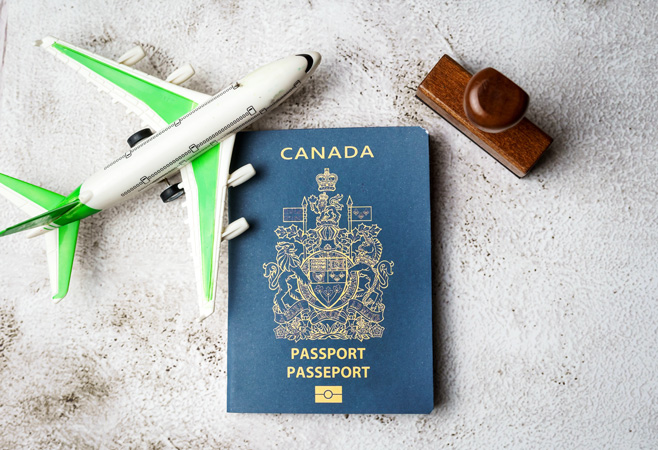
A Canada Visitor Visa, also known as a Temporary Resident Visa (TRV), is the key to exploring this vast and beautiful country
What Is a Canada Visitor Visa?
A Canada visitor visa, commonly referred to as a Temporary Resident Visa (TRV), is an official document that has been issued by the Government of Canada that enables foreigners from countries that require a visa to visit Canada temporarily. This type of visa is normally intended to be applied for tourism purposes, visiting family members or friends, or even short-term business visits.
The Canada Visitor Visa is placed in the traveler’s passport, and it certifies that the holder of the visa satisfies the entry criteria as applied in Canada. Unlike an eTA, which is issued to visa-exempt travelers, a visitor visa is required for individuals who are not eligible to travel to Canada without a visa.
Who Needs a Canada Visitor Visa?
Foreign nationals from countries that are not visa-exempt are required to obtain a Canada Visitor Visa before traveling to Canada. This applies regardless of whether the purpose of travel is tourism, visiting family or friends, or short-term business activities. Those who are not eligible to receive a Canada eTA have to apply for a visitor visa instead.
Moreover, passengers planning to visit Canada via air, land, or sea without citizenship in a visa-exempt nation require a Canada Visitor Visa. Travel history does not determine whether a visitor visa is required, but it may be considered by visa officers when assessing an application. Despite a valid visitor visa, the border officers decide whether a person should be granted entry into Canada upon arrival based on the eligibility and other supporting documents.
Do children need to obtain a Canada Visitor Visa?
The Canadian immigration requirements extend to children, as is the case with adult travelers. A child who holds a passport from a visa-required country must apply for a Canada Visitor Visa, as Canadian immigration law does not provide age-based exemptions.
Citizens of the visa-exempt countries do not require a visitor visa. Nonetheless, they have to undergo a Canada Electronic Travel Authorization (eTA) when flying to Canada by air, except U.S. citizens.
Even children who are traveling with parents or legal guardians will be required to possess personal passports and individual visa or eTA approvals. In some cases, the border officials of Canada might demand consent letters or custody papers as well.
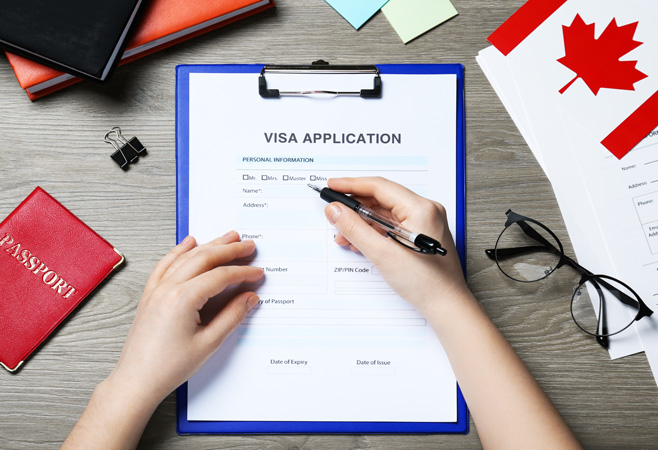
A visitor visa is needed to come to Canada as a tourist, or on a quick trip to visit family, or to do business for individuals from many countries
Who is exempt from applying for the Canada Visitor Visa?
Not every foreign citizen has to seek a Canada Visitor Visa prior to traveling to Canada. According to the Canadian immigration laws, there are classes of travelers who do not need to carry the visitor visa requirement (Under condition).
- Citizens of Visa-Exempt Countries
The Canadian Government has classified countries as visa-exempt, and nationals of visa-exempt countries do not require a Canada Visitor Visa for short-term stays. Nevertheless, during the air travel to Canada, these travelers will need to seek a Canada Electronic Travel Authorization (eTA) before traveling.
- United States Citizens
U.S. citizens are exempt from both the Canada Visitor Visa and the eTA requirement. They do not have to get any prior traveling permission and can visit Canada with a valid U.S. passport.
- Lawful Permanent Residents of the United States
U.S. lawful permanent residents do not require a Canada Visitor Visa. When traveling to Canada by air, they must hold a valid passport from their country of citizenship and a valid U.S. Green Card. For air travel to Canada, U.S. lawful permanent residents must obtain an eTA. An eTA is not required when entering Canada by land or sea.
- Travelers Transiting Through Canada
Transit passengers may be exempt from applying for a Canada Visitor Visa under the Transit Without Visa (TWOV) or China Transit Program, provided all eligibility conditions are met, and the transit is brief and uninterrupted.
- Holders of Certain Diplomatic or Official Passports
The visitor visa requirement may not apply to diplomats, consular officers, and representatives of international organizations, depending on the type of passport held and the purpose of travel.
Understanding the Different Types of Canada Visitor Visas
Canada has various categories of visitor visas, which are based on the purpose of visit and the frequency of travel by the traveler. Understanding these visa types helps applicants choose the most suitable option based on their travel plans.
- Single-Entry Visitor Visa
A single-entry visitor visa enables a traveler to visit Canada only once. Once the traveler leaves Canada, the visa cannot be used again, except when traveling to the United States or Saint Pierre and Miquelon, where re-entry may be permitted within the visa’s validity. Single-entry visas are often issued for specific travel plans, depending on the applicant’s circumstances and the visa officer’s assessment.

This visa allows you to enter Canada only once. You will need a new visa to re-enter Canada after you leave the country
- Multiple-Entry Visitor Visa
A multiple-entry visitor visa allows travelers to enter Canada multiple times while the visa remains valid. It may be issued for up to 10 years or until the passport expires, whichever comes first, depending on the applicant’s profile and immigration assessment. Each visit generally allows a stay of up to six months, unless a different period is specified by a border officer.
- Transit Visa
Travelers who are nationals of the countries that require visas and are going through Canada on their path to another destination must have a transit visa. This visa allows short transit periods and does not permit entry for tourism and other activities.
What are the documents required for a Canada Visitor Visa?
An applicant for a Canadian Visitor Visa must provide supporting documents that demonstrate compliance with Canadian immigration requirements. It is also necessary to fulfill every requirement of the Canada Visitor Visa since the visa officers evaluate the applications depending on the documentary requirements, credibility, and the intention of the applicant to leave Canada at the expiry of the time of authorized stay.
1. Valid Passport
The applicant will be required to submit a valid passport, issued by an authoritative body. The passport should not have expired before the intended stay in Canada and should contain sufficient blank pages for visa placement.
2. Completed Application Forms
All the necessary visitor visa application forms should be completed properly and honestly. Any inconsistency, omission, or misrepresentation may result in refusal under Canadian immigration law.
3. Photographs
New photos have to be provided as per the official requirements that are given by Immigration, Refugees and Citizenship Canada (IRCC). The photos that fail to comply can either slow down processing or get rejected.
4. Proof of Financial Capacity
The applicants will have to prove that they have enough funding to sustain themselves in terms of their travel, lodging, and day-to-day living in Canada. Some of the evidence that can be accepted could be bank accounts, employment records, or formal sponsorship records.
5. Purpose of Travel Documentation
The purpose of the visit is one of the most important requirements of the Canada Visitor Visa that should be clearly documented. This could be a travel plan, a hotel booking, or even an invitation letter from a host in Canada, accompanied by proof of the host’s legal status.
6. Evidence of Ties to the Home Country
Applicants must provide evidence of strong ties to their country of residence, such as employment, business ownership, property, or immediate family relationships. These documents should be prepared and submitted properly to strengthen the overall application.
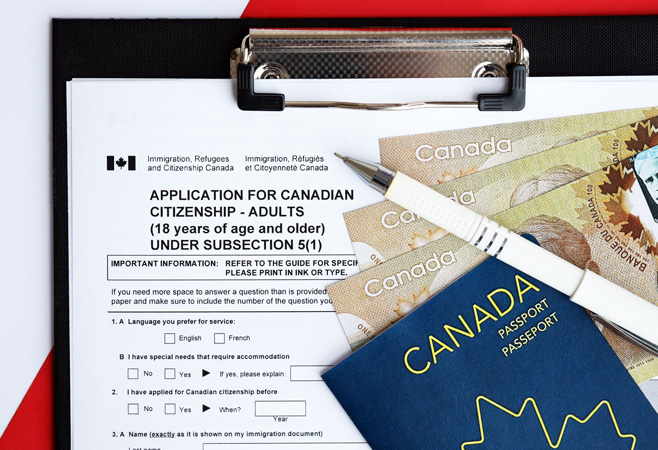
Holding a Visitor Visa allows you to travel across Canada and experience its unique culture, history, and natural beauty
How to Apply for a Canada Visitor Visa?
The Canada Visitor Visa application process follows a structured procedure and requires careful preparation and accurate documentation. Understanding each step helps applicants reduce delays and submit a complete and compliant application.
1. Confirm Your Eligibility
Before beginning the application, applicants must first determine whether they require a Canada Visitor Visa or qualify for visa-exempt travel.. Citizens of visa-required countries must apply for a visitor visa, whereas visa-free travelers are expected to obtain a Canada Electronic Travel Authorization (eTA) when traveling by air.
2. Prepare the Required Documents
Applicants should gather all required supporting documents in advance. They usually consist of a valid passport, duly filled application forms, recent photographs, evidence of financial means, and documents as to the purpose of the visit. Additional documents may be required depending on individual circumstances, which can be employment verification, a bank statement, or an invitation letter from the host in Canada.
3. Create an Online IRCC Account
The majority of applications for a Canada Visitor Visa are made on the Internet via the official portal of Immigration, Refugees and Citizenship Canada (IRCC). Applicants are required to create a secure online account to complete forms, upload documents, pay applicable fees, and track application status.
4. Complete and Submit the Application
The application forms should be filled out correctly and honestly. The information provided must match the supporting documentation exactly. Any misrepresentation, omission, or error may result in processing delays or refusal.
5. Pay the Required Fees
On submitting the visa application, the visitor visa application fee has to be paid online. In the event of biometrics, another biometric fee will be imposed. All application and biometric fees are non-refundable, regardless of the outcome of the application.
6. Provide Biometrics (If Applicable)
All applicants who are supposed to supply biometrics will be instructed upon submission. Biometrics must be provided at an authorized biometric collection center, as instructed by IRCC.
7. Track the Application and Receive a Decision
Processing times vary depending on the applicant’s location and the complexity of the case. Through their IRCC account, the applicants are able to follow up on the updates. In the event of approval, the applicants will be instructed on how to submit their passports so as to get the visa. Regularly monitoring application updates helps ensure a smoother visa processing experience.
What is the processing time for my Canada Visitor Visa?
The processing time of the Canada Visitor Visa depends on a number of factors, such as the country of residence of the applicant, the season, and the completeness of the application. Processing time differs depending on the country and is presented as estimates, with many applications taking several weeks to several months to process. The applications will require more time in high travel seasons or those that involve extra background checks.
There is no guarantee on processing times, and they can vary at any given time depending on the volume of applications and immigration policies. Applicants are advised to regularly check the official Government of Canada website for the most up-to-date processing time information.

The reason you're traveling to Canada determines the way you apply and the documents you need to submit with your visa application
How to Extend Your Visitor Visa in Canada?
If you wish to remain in Canada beyond your authorized period for tourism, visiting family or friends, or other temporary purposes, you must apply to extend your visitor status before it expires. Visitor status is not extended automatically in Canada, and visitors must apply for an extension before their authorized stay expires.
- Determine Whether You Need an Extension
You may apply to extend your visitor status before your authorized stay expires, by submitting an extension application. This extension is known as a visitor record, which allows you to remain in Canada legally as a visitor for a longer period.
- Submit an Online Application
The requests to extend visitor status are to be made online using the Immigration, Refugees and Citizenship Canada (IRCC) portal. It is strongly recommended to apply at least 30 days before your current status expires to avoid losing legal status.
- Prepare Required Documents
Applicants must prepare all required supporting documents before submitting the extension application. Immigration, Refugees and Citizenship Canada (IRCC) requires proper documentation in order to determine your eligibility and the authenticity of your claim.
Applicants must provide a valid passport that remains valid for the entire duration of the requested extension. You also have to demonstrate that you have enough financial resources to cater to you in the long term, like the recent bank statements or other financial documents.
Moreover, the applicants must provide a written justification that clearly indicates the reason for the extension, the period of an extended period of stay sought, and assurance that they will continue to comply with visitor conditions. Proving evidence including travel plans or family visits should be provided in case they are updated.
All the documents should be correct, consistent, and in case they are not in English or French, the certified translations are required as per the requirements of IRCC.
- Maintained Status While Waiting
If the application is submitted before the current status expires, the applicant may remain in Canada under maintained status while awaiting a decision. The extension of the visitor status does not mean subsequent approvals of visas or re-entry to Canada. To have a successful extension, it is necessary to submit it promptly and properly file it.
- Receive a Decision
If approved, IRCC will issue a visitor record indicating the new authorized period of stay. The extension of visitor status does not mean that the person will be able to receive visas in the future and return to Canada. The extension should be successful by submitting the same on time and with the right paperwork.
IRCC recommends applying at least 30 days before your current status expires to avoid potential loss of status
Common Reasons for Canada Visitor Visa Refusal
A Canada Visitor Visa application may be refused if the visa officer is not satisfied that the applicant meets all immigration requirements. The top reasons for refusal are the following.
1. Insufficient Proof of Financial Support
Applicants are required to show that they possess adequate funds to meet traveling and accommodation expenses, as well as daily living expenses of their stay in Canada. Poor bank statements, lack of transparency of the origin of funds, or lack of financial records could lead to rejection.
2. Weak Ties to the Home Country
The visa officers have to be convinced that the applicant has intentions to return to his or her home country upon the expiration of the authorized stay. Lack of stable employment, family commitments, possession of property, or any other form of strong ties to the home country can bring forth overstaying concerns.
3. Unclear or Inconsistent Purpose of Travel
The lack of clarity regarding the purpose of travel or the mismatch of the application forms and supporting documents can result in refusal. The applicant’s explanation of the visit must be clear and supported by relevant evidence.
4. Previous Immigration or Travel Violations
Previous overstays, visa refusals, or non-compliance with immigration laws in Canada or other countries may negatively affect an application.
5. Incomplete or Inaccurate Application
Lack of documents, misinformation, or misrepresentation can lead to rejection.
These are important to minimize the chances of Canada Visitor Visa rejection through proper preparation and proper documentation.

Visa applications can be refused for various reasons, including insufficient funds, unclear travel purposes, or failure to convince the officer that you will leave Canada at the end of your visit
Tips to Improve Your Canada Visitor Visa Approval Chances
Preparing Strong Supporting Documents
To make a successful application for a Canada Visitor Visa, the submission of well-organized, accurate, and complete supporting documents is important. Applicants should submit clear and sufficient evidence of financial capacity, employment or business obligations, travel history, and accommodation plans. All documents must be consistent with the information provided in the application forms and remain up to date. In cases where the documents are not in English or French, certified translations are to be given to meet the requirements of IRCC.
Writing a Clear Purpose of Travel
The applicants should state explicitly why they will be visiting Canada, how long they will be staying, and what they will be doing. The reason for the travel must be plausible and backed by pertinent evidence like travel itineraries, hotel reservations, or invitation letters from Canadian hosts. This can even cause doubts in the evaluation in case the explanation and the supporting documents are not congruent.
Avoiding Common Mistakes
Some of the common causes of refusal are incomplete application forms, inconsistency in the information provided, missing documents, or lack of clarity in the financial records. All applicants must be very keen to verify all information before they submit it, as any wrong or wrongly projected statements can lead to rejection or adverse effects on immigration in the future.
Applying Early
Applying early enough before the actual travel date will give enough time to respond to any other document requests, biometric needs, or any delays in processing the application. Pre-planning is a major way of enhancing the general readiness of the application and eliminating undue pressure.
Entering Canada with a Visitor Visa (Temporary Resident Visa – TRV)
A visitor visa, also referred to as a Temporary Resident Visa (TRV), is an entry document that enables a foreigner to enter Canada via any port of entry. But having a valid visa does not mean one is certain to be admitted. It is upon arrival, and upon the decision of an officer of the Canada Border Services Agency (CBSA) who is authorized to grant entry in accordance with Canadian immigration laws.
1. Documents Required at the Port of Entry
Travelers arriving in Canada can be asked to produce the following documents to a CBSA officer:
- Valid Passport: The passport should have a valid visitor visa to stay in Canada.
- Visitor Visa (TRV): The counterfoil visa that is attached to the passport by a Canadian visa office.
- Evidence of Financial Support: Demonstration of the traveler having enough funds to meet the costs of traveling and living in Canada.
- Letter of invitation (where necessary): In case of traveling to visit friends or relatives, an invitation letter can be used to verify the reason behind the travel.
- Travel and Accommodation: Info on the return or onward travel and the address of the desired place to stay.
2. Entry and Inspection Process
In most large airports, passengers can be guided towards the Primary Inspection Kiosk (PIK) to scan their passport, take a photograph, and respond to the questions related to customs. Biometric data can be compared to the records obtained in the process of applying for a visa.
The travelers will then converse with a CBSA officer, and he/she might pose questions about the intent of the visit, the duration of their stay, and connections with the home country to evaluate the adherence to visitor conditions.
Visitors are generally authorized to stay in Canada for up to six months, unless a shorter or longer period is specified by a border services officer or indicated in a visitor record. In the case of issuing no entry stamp or record of the visitor, the authorized stay will expire after six months of the entry date.
3. Prohibited and Restricted Items
Canada has stringent border control. Some items that are required to be declared by the traveler include food, plants, animals, currency of CAD 10,000 or above, and firearms or weapons. Non-disclosure of restricted or prohibited goods can lead to seizure, fines, criminal prosecution, or inadmissibility to Canada.
Conclusion
Finally, a Canada Visitor Visa is a suitable option for any traveler who intends to visit Canada temporarily in order to have a tour, visit family, or do business. To make your visa process more successful, you should plan the preparation of a full application, apply promptly, and pay close attention to the requirements provided by the authorities to shorten the duration of your waiting and enhance your chances of success.
As an alternative to entering Canada by air, a traveler in a visa-exempt country can apply online to be given the eTA, which is much more convenient. Even though the eTA process is less complicated than a visitor visa application, accuracy plays a crucial role in ensuring that there are no refusals or problems with airline boarding.
As a way of making sure your eTA application is done right and in accordance with the Canadian immigration policies, it is advisable that you submit your application to the Canadian immigration services. Canadian Immigration Services can assist in ensuring a stress-free, safe, and smooth journey to Canada with the help of professional assistance and current facts on the rules and regulations of entering Canada.