Packing List for Canada: What to Bring for Every Season
Updated: October 23, 2026
A practical packing list for Canada starts with your itinerary: where you are going, when you are visiting and how much time you will spend outdoors. Bring travel documents, essential medication, comfortable footwear and clothes you can layer. Then adjust your luggage for city sightseeing, mountain hikes or winter activities, rather than packing for every possible Canadian climate.
Essential Items for Your Canada Trip
Use this packing list for Canada as your starting point. Add specialist equipment only when your plans require it.
Category | What to pack | Practical tip |
Documents | Passport, required visa or eTA, accommodation details and transport bookings | Keep documents accessible during your journey |
Clothing | Everyday outfits, underwear, socks, a warm layer and weather protection | Choose pieces you can combine |
Footwear | Comfortable walking shoes and activity-specific footwear | Wear shoes you have already tested |
Health and toiletries | Essential medication, toiletries, sunscreen and personal medical supplies | Keep medication with you |
Electronics | Phone, charging cables, suitable plug adapter and permitted power bank | Download important information for offline access |
Money | Payment cards and some Canadian currency | Keep a backup payment method separately |
Day bag | Small backpack, reusable bottle and compact rain protection | Leave room for layers you remove |
Choose your luggage around how you will travel. A wheeled suitcase can work well for hotel stays, while a backpack or duffel may be easier when moving frequently between accommodations.
Check your airline’s baggage allowance before choosing a bag. Carry-on dimensions, weight limits and included baggage depend on your carrier and ticket.
 Consider what you will use to pack for a trip to Canada
Travel Documents to Keep in Your Carry-On
Put documents at the top of your packing list for Canada. Clothing can usually be replaced; missing travel authorization can disrupt your departure.
For an international visitor, prepare:
- A valid passport or other accepted travel document.
- The visa or eTA required for your nationality, status and route.
- Accommodation addresses and booking confirmations.
- Return or onward travel details, where applicable.
- An itinerary and emergency contact information.
- Insurance documents, if you have purchased cover.
Requirements vary according to citizenship, immigration status and how you travel. Check the rules that apply to you rather than assuming everyone needs the same documents.
An eTA is different from a visitor visa. It is electronically linked to your passport and generally remains valid for up to five years or until that passport expires, whichever happens first. Travel with the passport used for the application. Getting a new passport means applying for a new eTA.
The authorization’s validity does not determine how long you can remain in Canada. Most visitors can stay for up to six months, but the border officer may authorize a different period.
For children, prepare their required identification and any applicable custody documents or consent letter, particularly when a parent or legal guardian is not travelling with them.
What to Pack for Canada by Season
Adapt your packing list for Canada to the forecast for each stop. Season names provide a starting point, but weather can differ considerably between regions.
Season | Clothing to prioritize | What to consider |
Spring, roughly March–May | Long trousers, long-sleeved tops, a fleece or sweater and waterproof outerwear | Some destinations still have snow and winter conditions |
Summer, roughly June–August | Breathable tops, shorts or lightweight trousers, a sun hat and a light warm layer | Mountain outings require additional weather protection |
Autumn, roughly September–November | Layering pieces, long trousers, rain protection and progressively warmer outerwear | Late-autumn conditions can require winter clothing |
Winter, roughly December–February | Thermal layers, an insulated coat, warm socks, gloves, a hat and suitable boots | The right insulation depends on location and outdoor exposure |
These are planning windows, not reliable boundaries for snow or cold weather. The Canadian government notes that snow can persist into March or April in many places, while winter rain is more common around Vancouver and Victoria.
Layering helps you adjust throughout the day. Start with a comfortable base layer, add insulation when needed and use an outer layer suited to rain, wind or snow.
For outdoor activities, choose clothing that remains practical when damp and can be removed or added easily. Parks Canada recommends carrying several layers even when a hike begins in warm, sunny conditions.
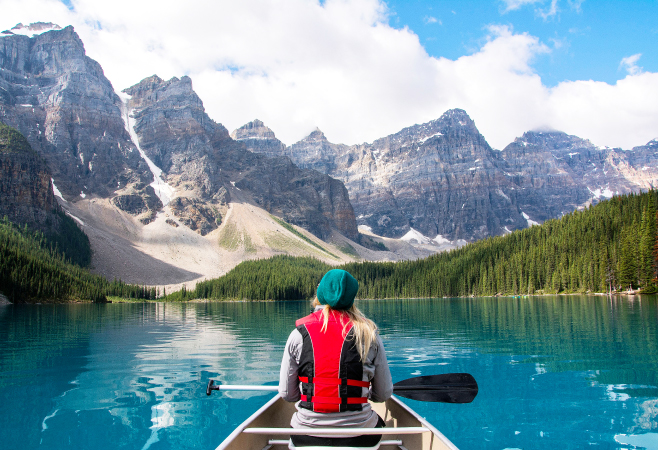 Bring suitable clothes to adapt the weather conditions in Canada
Adjust Your Packing for Your Canadian Destination
Your packing list for Canada should reflect the conditions you will actually encounter, especially if your route combines cities and outdoor destinations.
Vancouver and Victoria: For wet-weather visits, prioritize a hooded waterproof jacket, shoes that handle rain and a way to protect belongings inside your day bag. Check the forecast before deciding how much insulation to bring.
Toronto, Ottawa, Montréal and Québec City: Build your wardrobe around your travel dates. Summer sightseeing and winter walking require very different clothing. For cold-weather trips, consider how long you will spend outside between indoor stops.
Banff, Jasper and other mountain destinations: Add weather protection and warm layers for your planned elevation and activities. A forecast for your accommodation does not replace checking conditions on the trail.
Northern and remote destinations: Ask your operator for a trip-specific equipment list before buying or packing specialist gear. Confirm what is supplied, what you must bring and any baggage restrictions.
For a route covering several regions, pack a flexible core wardrobe and add the equipment needed for the most demanding part of the trip.
A Suggested Clothing Checklist for Seven Days
This sample packing list for Canada suits a week of casual sightseeing with opportunities to rewear clothing. Adjust it for weather, laundry access and personal preferences.
- Four or five everyday tops.
- Two or three pairs of trousers, shorts or other suitable bottoms.
- Seven sets of underwear.
- Socks appropriate for your shoes and activities.
- One or two sweaters or fleece layers.
- One weather-appropriate outer jacket.
- Sleepwear.
- One pair of comfortable walking shoes.
- A second pair of footwear only if your itinerary needs it.
- Swimwear if your accommodation or activities make it useful.
For winter, add thermal tops and bottoms, warm accessories and suitable insulated footwear. For summer, prioritize breathable clothing while retaining a warm layer for cooler conditions.
For a longer trip, plan laundry instead of automatically doubling everything. Pack clothes that work together, and avoid taking several bulky items that serve the same purpose.
 Remember to get a Canada e-visa before traveling
Toiletries, Medication and Electronics
Keep this part of your packing list for Canada compact and tailored to what you use regularly.
Bring a toothbrush, toothpaste, deodorant, essential skincare, sunscreen, lip balm, glasses or contact lens supplies, and personal hygiene products. Check what your accommodation provides before packing full-size toiletries.
Keep medication in its original retail or pharmacy packaging, or with its original identifying label. Health Canada has specific personal-import rules, and controlled medicines require separate attention. Check your exact medication before departure rather than assuming every prescription follows the same rules.
For electronics, consider:
- Your phone and charging cable.
- A suitable plug adapter.
- A permitted power bank.
- Camera equipment you expect to use.
- Offline copies of maps, reservations and emergency contacts.
Check your device’s electrical compatibility before using it abroad. A plug adapter changes the connection; it does not automatically convert voltage.
Review travel insurance against your activities and medical needs before buying. Our guide to travel insurance for visitors to Canada provides a starting point for considering cover.
Carry-On Packing and Restricted Items
Organize your packing list for Canada so a delayed checked bag would cause as little disruption as possible.
Keep your passport, medication, valuables, phone, essential chargers and a change of clothes in your carry-on. For a winter arrival, keep the clothing you need immediately after landing within reach.
At Canadian airport security, ordinary carry-on liquids, aerosols and gels must be in containers no larger than 100 ml or 100 g, fitting inside one clear, resealable bag with a capacity of no more than one litre. Exceptions apply to certain medical and infant-related items. Check departure and transit airport rules separately.
Pack power banks in your carry-on and check your airline’s current capacity, storage and onboard-use restrictions. If your cabin bag is taken for gate-checking, remove the power bank first.
Before packing food, check whether that particular product is permitted. Declare all food, plant and animal products when entering Canada; declaring an item does not automatically make it admissible.
Do not bring cannabis or CBD products across the Canadian border without the required authorization. Legal availability within Canada does not make cross-border transport lawful.
Leave space for purchases on your return journey. Maple syrup and other liquid souvenirs also need to meet applicable baggage and security rules.
 Bring essential items to have a smooth trip in Canada
Canada Travel Packing List for Specific Activities
Extend your packing list for Canada according to your activities:
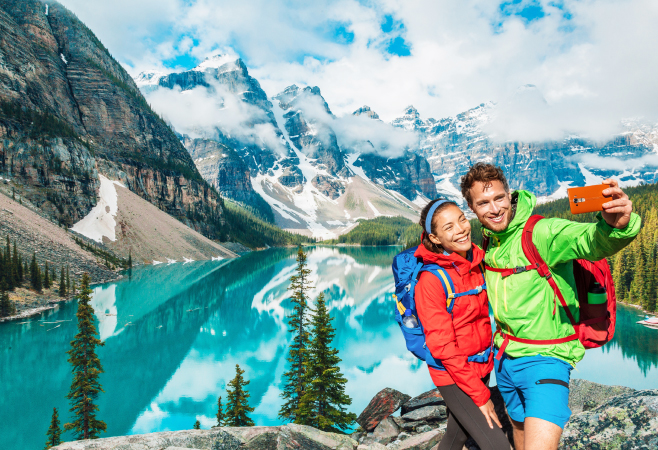
For hiking: Bring appropriate footwear, a daypack, food, water, extra layers, weather protection, navigation tools and emergency supplies suited to the route. Download maps, but do not rely entirely on mobile coverage. Check trail conditions and leave your plans with someone before setting off.
For bear country: Check local park guidance and arrange suitable bear spray after arrival when needed. CATSA’s outdoor-travel guidance states that bear spray is not allowed in carry-on or checked baggage. Learn how to carry and use it before your outing.
For skiing or snowboarding: Pack thermal layers, waterproof outerwear, suitable gloves and ski socks. Confirm rental arrangements before deciding whether to bring a helmet, boots or other bulky equipment.
For road trips: Keep charging equipment, offline directions, drinking water and weather-appropriate clothing accessible. Ask your rental provider about required driving documents and any equipment supplied with the vehicle.
Frequently Asked Questions About Packing for Canada
These answers help you refine your packing list for Canada around common travel decisions.
Do I need a winter coat for Canada in July?
A heavy winter coat is not a default requirement for a southern city holiday in July. For mountain or northern itineraries, check the forecast and your operator’s advice. A warm layer and weatherproof shell may still be useful even during summer.
Can I visit Canada with carry-on luggage only?
Yes, if your belongings fit your airline’s allowance and comply with security rules. A short city trip with laundry access is generally easier to pack this way than a winter sports holiday requiring bulky equipment.
Should I bring hiking boots for Banff?
Choose footwear for your planned trails. Well-fitting hiking shoes or boots with suitable grip may be appropriate, but heavy boots are not necessary for every sightseeing stop. Check route conditions and break in footwear before travelling.
Can I buy winter clothing after arriving?
You can plan to purchase additional clothing locally, but bring enough protection for the journey from the airport to your accommodation. Consider your arrival time and whether shops will be accessible before relying on immediate purchases.
Traveling Confidently When You Have a Packing List for Canada
Review your packing list for Canada against your final itinerary. Check the forecast, weigh your bags, confirm baggage allowances, and keep your arrival essentials accessible.
Before departure, confirm which travel authorization applies to your passport and route. If you are eligible for an eTA and would like application assistance, you can start your Canada eTA application through our service. Our service provides private application assistance; Canada’s official authorization is an eTA, and approval does not guarantee entry.