Canada Express Entry Requirements: Eligibility, CRS Score & Tips
Updated: April 21, 2026
Canada Express Entry is a points-based system used to select skilled workers for permanent residence. The system manages applications for three main economic immigration programs and selects the qualified candidates according to the points-based ranking system. Express Entry has become a popular option for professionals seeking new career opportunities and a high quality of life in Canada due to its simplified procedure and clear selection criteria. This guide will discuss the operation of the Canada Express Entry system, its requirements, and how applicants can stand a better chance of getting an invitation to apply for permanent residence.
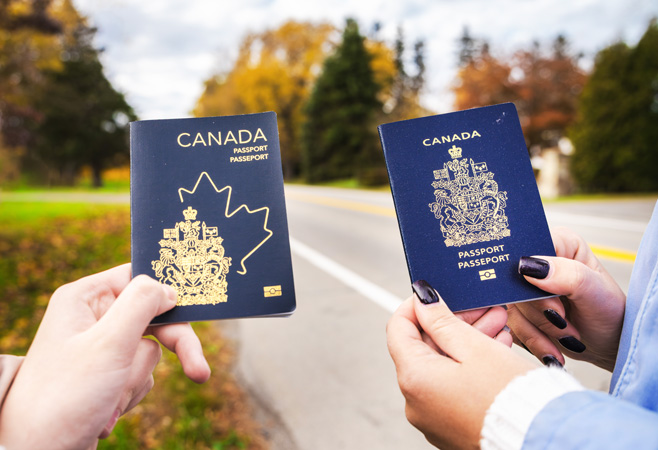
Canada Express Entry is an online system that we use to manage immigration applications from skilled workers.
What Is Canada Express Entry?
The Canada Express Entry system is an online immigration system used by the Canadian government to manage permanent residence applications of skilled workers.It is made to filter candidates with the qualifications to play a role in the Canadian economy.
It covers three main programs: the Federal Skilled Worker Program, Federal Skilled Trades Program, and Canadian Experience Class. The programs are all aimed at various categories of skilled candidates.
The Express Entry candidates will fill out their profiles online and list information on age, education, experience, and language proficiency. Your profile is scored based on factors like age, education, work experience, and language ability, which is called the Comprehensive Ranking System (CRS).
Candidates with higher scores are more likely to receive an Invitation to Apply (ITA). This makes Express Entry one of the fastest immigration pathways in Canada.
Programs Managed Under Express Entry
The Express Entry system in Canada oversees three main skilled immigration programs.All programs will target a specific kind of applicant based on the work experience, qualifications, and background.
Federal Skilled Worker Program (FSWP)
The Federal Skilled Worker Program is designed for skilled workers with relevant foreign or Canadian work experience.It is suitable for professionals such as teachers, engineers, managers, and other qualified employees.The factors that are used to determine the applicants include age, education, language, work experience, and adaptability.
Federal Skilled Trades Program (FSTP)
The Federal Skilled Trades Program is meant to be administered to individuals who have qualified in a skilled trade.This comprises jobs that are electricians, plumbers, welders, carpenters, and mechanics. To qualify, applicants usually need work experience in a skilled trade and either a valid job offer or a certificate of qualification.
Canadian Experience Class (CEC)
The Canadian Experience Class is targeted at those who already have skilled work experience in Canada and are eligible.It is a common choice among the temporary foreign workers and international graduates who have acquired Canadian work experience and have a desire to become permanent residents.

There are 3 immigration programs managed through Express Entry
Who Can Apply for Canada Immigration Express Entry?
The Express Entry system in Canada aims at skilled workers wishing to be permanent residents.Nevertheless, not all people can directly apply.The candidates have to satisfy some of the requirements in one of the key economic immigration plans in Canada.
The Canada Immigration Express Entry system evaluates candidates on the basis of their work experience, education, language skills, and adaptability.The following are the key categories of individuals who may utilize Express Entry.
1. Skilled Workers with Foreign Work Experience
Skilled workers with foreign work experience can apply through the Federal Skilled Worker Program (FSWP). The candidates should possess a minimum of one year of full-time work experience in a skilled profession as well as a good command of English or French.The selection is also based on educational qualifications and other characteristics like age and adaptability.
2. Skilled Workers with Canadian Work Experience
Individuals who already have work experience in Canada can use the Canadian Experience Class (CEC).This program suits temporary foreign workers or international graduates who have at least one year of skilled work experience in Canada during the past three years.
3. Skilled Trades Workers
Experienced people working in certain skilled trades have an opportunity to apply under the Federal Skilled Trades Program (FSTP).Professions that can qualify include construction, electrical, maintenance, and manufacturing.Applicants typically require a valid job offer or a certification of qualification by an authority in Canada.
4. Provincial Nominee Program Candidates
The Express Entry pool may also have some applicants who apply via a Provincial Nominee Program (PNP).The Canadian provinces are able to nominate their own candidates according to their labor market requirements, and this means that their probability of getting an Invitation to Apply (ITA) to permanent residence is high.

Express Entry category-based draws have been introduced to invite candidates who fall under six categories to apply for permanent residence
How Does the Canada Express Entry System Work?
The Express Entry system is an online immigration system used by the Canadian government in order to administer permanent residence applications by skilled workers.It is used to recruit people who are capable of contributing to the economy of Canada and can serve the demands of the labor market in Canada.It has a number of key steps that should be undertaken by the applicants prior to them becoming permanent residents of Canada.
1. Create an Online Profile
The initial move in the Express Entry process is the establishment of an online profile on the official site of the Immigration, Refugees and Citizenship Canada (IRCC).The applicants have to submit personal and professional details, such as age, education, work experience, the outcomes of language tests, and other data.This information is applied to either approve that the candidate has qualified under at least one of the Express Entry immigration programs.

The process of obtaining the PR Visa commences with the filing of the digital Express Entry form by furnishing crucial documents about Education, Experience, and other personal documents
2. Enter the Express Entry Pool
In case the applicant satisfies the eligibility criteria, his profile will be put in the Express Entry pool. The pool includes candidates from around the world who want to immigrate to Canada.The profiles of the candidates are then evaluated and rated against those of other candidates in the pool.
3. Receive a Comprehensive Ranking System (CRS) Score
Candidates are then rated in a system called the Comprehensive Ranking System (CRS) after they pass through the pool.It is a points-based system that does an assessment of the applicants depending on various factors, which may include age, level of education, language proficiency, and work experience, among others.Additional marks can also be given for a sound job offer or provincial nomination.
4. Wait for an Invitation to Apply (ITA)
The Express Entry is a periodic draw that is conducted by immigration authorities to pick candidates out of the pool. Candidates with the highest CRS scores are invited to apply for permanent residence.As long as a candidate achieves or exceeds the necessary cut-off score, then he or she will be sent an Invitation to Apply (ITA).
5. Submit a Permanent Residence Application
Candidates are required to file a complete application within 60 days of obtaining an ITA to apply to be granted permanent residence.This involves the submission of all the necessary documents, filling out all the forms, and paying fees.After the review and approval of the application, the applicant is allowed to officially relocate to Canada as a permanent resident.
How long does Express Entry processing take?
Most Express Entry applications are processed within about six months after submission, though in general, the system is relatively fast compared to other immigration programs. The Immigration, Refugees and Citizenship Canada (IRCC) reports that, on average, most Express Entry permanent residence applications are processed in about six months after a complete application is submitted, although the time spent waiting in the Express Entry pool can vary significantly.
One should know that the Express Entry schedule consists of a number of steps. To begin with, the applicants join the Express Entry pool by creating an online profile. Waiting time to get an invitation to apply (ITA) may vary based on the score of the Comprehensive Ranking System (CRS) of the candidate and the cut-off score of the draw.
Upon receipt of an ITA by a candidate and filing of a complete permanent residence application together with all the necessary documentation, IRCC proceeds to process the application. In case the information is correct and all the documents are submitted, the application can be approved within the normal six-month processing time.
Processing times can be, however, increased by the fact that additional documents may be requested, the background checks can be more time-consuming, and the number of applications might be high. The preparation of proper papers and filing a full application may be one of the reasons to avoid delays and stand a better chance of being processed faster.
Most Express Entry applications are processed within six months, making it one of the fastest immigration programs in Canada
Understanding the Canada CRS Score
The Comprehensive Ranking System (CRS) is a points system that is applied by the Canadian government to rank candidates in the Express Entry pool.The score helps immigration officers identify applicants who are most likely to succeed in Canada in the labor market.The high-CRS candidates are more likely to be given an Invitation to Apply (ITA) when applying for permanent residence.The knowledge of the workings of the CRS score can assist applicants in increasing their odds of getting selected.
1. What is the Canada CRS Score?
The CRS score is a numerical value that is given to every candidate in the Express Entry pool.It assesses the candidates on a number of human capital and other aspects.The maximum CRS score is 1,200 points.The immigration authorities, on a regular basis, hold draws and invite those who have scored the highest to apply to become permanent residents.
2. Factors Affecting the CRS Score
Age
Age is one of the factors that are applicable in CRS calculation.The ones between 20 and 29 years old are likely to receive the highest points, considering that they are expected to have a higher prospective working life in Canada.
Education
Education is one of the factors that can boost the CRS score of the candidate greatly.Applicants with Bachelor's, Master's, or Doctoral degrees receive more points as compared to those who have lower educational levels.
Work Experience
Both Canadian and foreign work experience can contribute to the CRS score.The candidates who have the highest number of years of skilled work experience tend to score more points, especially when the experience is in positions that the Canada labor market requires.
Language Ability
Another critical factor is proficiency in English or the French language.Better results in the approved language tests like IELTS, CELPIP, TEF, or TCF may raise the CRS points of a candidate.
Adaptability
The adaptability factors can also enhance the CRS score.These may be the presence of family members in Canada, prior school or work experience in Canada, or a spouse with strong language ability or Canadian education/work experience.
3. Ways to Improve CRS Score
There are a few methods to enhance the CRS score of the applicants.As an illustration, they may rewrite language tests to obtain higher marks, acquire more working experience, get higher education, get a legitimate job offer by a Canadian employer, or be nominated by a province, which may contribute substantially to their overall points.These factors could be improved significantly to improve the probability of getting an ITA.

The Comprehensive Ranking System (CRS) is a points-based system that we use to assess and score your profile and rank it in the Express Entry pool
Essential Documents Required for Canada Express Entry Applications
Applying under the Express Entry system, it is essential that the applicant prepares a few important documents that would demonstrate their suitability to immigrate to Canada.These certificates are used to confirm the identity, education, and work experience of the applicant, among other important credentials of an individual, to the immigration department. Preparing these documents early can help avoid delays so that the application process is accelerated.
- Valid Passport or Travel Document
One of the most critical documents when applying through Express Entry is a valid passport.To identify the nationality of the applicant, they are required to send a copy of their passport or travel document to establish their identity.The immigration process should not create any problem, as the passport must be valid at all times.

If your passport expires within 6 months of the day you apply, you should renew it
- Language Test Results
The applicants should be able to communicate in either English or French.The language tests that are accepted are IELTS or CELPIP when it comes to the English language and TEF or TCF when it comes to the French language.The outcomes should be obtained through an accredited testing body, and in most cases, the validity is two years. - Educational Credential Assessment (ECA)
Applicants who have graduated outside of Canada normally require an Educational Credential Assessment.This report ascertains that a foreign degree, diploma, or certificate is equivalent to the Canadian education standards.It must be issued by a designated organization approved by the Canadian government. - Proof of Work Experience
The applicants are required to demonstrate their work experience.This can comprise employment reference letters, contracts, pay slips, or any other documents that provide a clear description of job responsibilities, employment period, and working hours. - Proof of Funds
Most applicants need to show proof of funds to support themselves and their family.Bank statements or official letters from financial institutions are usually provided as evidence of funds. - Police Clearance Certificates
Police certificates must be provided to show that the applicant does not have a criminal record that will render him or her inadmissible to Canada.The certificates have to be acquired in the countries in which the applicant has resided for a long time. - Medical Examination Results
It will require the applicants to undergo a medical check led by a physician who has been certified by the Canadian government.This will help to make sure that the applicant can satisfy the health requirements of Canada before turning out to be a permanent resident.
Key Advantages of Applying Through Canada Express Entry
Express Entry offers several advantages for skilled workers who would like to immigrate to Canada.Faster processing times form one of the key advantages.Express Entry has many permanent residence applications that are processed in about six months, hence it is one of the fastest ways of immigration.
The other significant advantage is the transparent system of choice.The Comprehensive Ranking System (CRS) is clear in its evaluation of the candidates on matters of their age, education, work experience, and language capacity.This is a points-based system that facilitates the selection of the most qualified candidates.
Express Entry is also an opportunity to get permanent residence in Canada.The successful applicants and their families are able to live, work, and study anywhere in the country.
Successful applicants can live and work in Canada and may access public services such as healthcare and education, depending on eligibility.
Top Mistakes to Avoid in Your Canada Express Entry Application
Applying through Express Entry can be competitive, and small mistakes can affect your chances. These are the most common mistakes that can be learned, enabling the candidates to even prepare better and increase their success.
- Incomplete or Incorrect Profile Information
A major error is that of providing incomplete or inaccurate information in the Express Entry profile.Mistakes in personal information, job experience, or education records may cause eligibility or work-related issues in the last process of application. - Low CRS Score
A large number of candidates get added to the Express Entry pool and fail to receive an Invitation to Apply due to having a low Comprehensive Ranking System (CRS) score.The score can be improved by improving language test results, acquiring more work experience, or getting a provincial nomination. - Missing or Invalid Documents
There are also cases when the required documents are not prepared by the applicants.Lack of documentation, language tests that are out of date, or missing proof of job experience can delay the process or lead to rejection. - Not Updating the Express Entry Profile
The other error is the failure to revise the profile in case of any new achievements, like a better language score or extra work experience.Additional points to the profile can be achieved by updating the profile and letting it raise the likelihood of an invitation. - Misunderstanding Program Requirements
Other applicants do this without being well aware of the eligibility conditions of the various Express Entry schemes.Reviewing the criteria is a careful process that will avoid unnecessary errors when submitting a profile.

The Express Entry Program of Canada is a unique and fast-track immigration program based on points that facilitates skilled workers to obtain Permanent Residency in Canada
Tips for a Successful Express Entry Application
To improve your chances, focus on optimizing your profile and avoiding common mistakes, and therefore, proper preparation is vital.With proper adjustments to your profile and some of the most common pitfalls, you can significantly improve your chances of receiving an Invitation to Apply (ITA)
1. Improve Language Test Scores
English or French language competency is very significant in the Comprehensive Ranking System (CRS).A better score on accepted language tests like IELTS or CELPIP will boost your CRS by a significant margin.Most candidates choose to retake the test in order to get a higher score and a higher position.
- Gain More Work Experience
Other competent work experience may enhance the profile and improve your CRS score.Occupational work experience in jobs that are categorized as skilled in Canada is particularly good and can enhance your eligibility as per some Express Entry programs.
- Apply Through a Provincial Nominee Program (PNP)
The nomination of a province or territory in Canada can go a long way in ensuring your success.Provincial nomination also offers the CRS points that may help to obtain the invitation to apply more easily.
- Keep Your Profile Updated
Candidates are expected to update their Express Entry profile on a regular basis whenever their career profile has changed, such as better language tests, new work experience, or new educational qualifications.New information may enhance CRS points and a high chance of selection.
- Prepare Documents Early
Having ready some of the required documents like passports, results of language tests, and employment records is useful in preventing the time wasted after getting an invitation to apply.Being well prepared means that the application is quick and easy.
Conclusion
Express Entry is a structured system that selects skilled workers based on factors like education, work experience, and language ability. The program has enabled the Canadian government, through a clear and points-based selection system, to select candidates with skills, education, language proficiency, and work experience necessary to help the country grow economically. Learning about the principles of Express Entry, preparing the required documents, optimizing the most important aspects like language test results and work experience, the applicants can enhance their chances of being invited to apply for permanent residence.
Travelers from visa-exempt countries may need an Electronic Travel Authorization (eTA) when flying to or transiting through Canada. If you need to apply for an eTA online, you can visit Canada Immigration Services and get good advice along with filling out the application form, which will be conveniently prepared before you travel. Another way of making sure that you have a good experience traveling and gaining access to Canada is by doing your travel paperwork beforehand.