
Canadian Tulip Festival in Ottawa: Best Time to Visit & Things to Do
Updated: April 22, 2026
The Canadian Tulip Festival is one of the most renowned spring events in Canada. This festival is held every year in Ottawa, Ontario, and it can be said to be a celebration of the beginning of spring as well as a rich historical connection between Canada and the Netherlands. Every year, millions of tulips bloom across the city, turning parks, streets, and landmarks into colorful displays.
The Canadian Tulip Festival is the largest of its kind in the world and attracts both local and international visitors. Other than the spectacular floral splendor, the festival symbolizes gratitude, peace, and international friendship- values that are still meaningful decades after it was established.
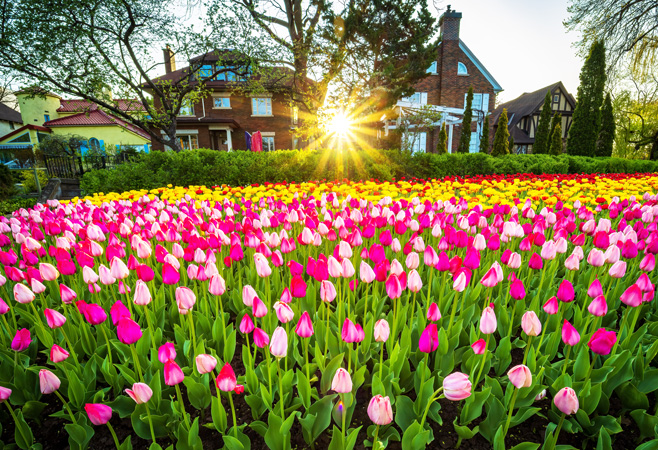
This popular annual event features massive tulip displays, family fun, and more
Why You Should Visit the Canadian Tulip Festival
The Canadian Tulip Festival is a must-see event to enjoy one of the most scenic spring events in Canada, where Ottawa is surrounded by millions of tulips that turn the city into a flower garden. The festival is not all about flowers but a mixture of history, culture, and beautiful views of the city, particularly around Dow's Lake and Parliament Hill. It is also a significant commemoration of the long-standing friendship between the Netherlands and Canada, and makes the festival both historically meaningful and visually impressive.
Canadian Tulip Festival Overview: History, Location, and Highlights
When is the Canadian Tulip Festival 2026?
The Canadian Tulip Festival 2026 is scheduled to take place from May 8 to May 18, 2026, in Ottawa, Ontario, Canada. The festival is mainly held at Commissioners Park on Dow's Lake; there are also other tulip displays and other related activities that are held in other places within the city.
Quick overview:
- Start Date: Friday, May 8, 2026
- End Date: Monday, May 18, 2026
Held each spring, the Canadian Tulip Festival commemorates the blooming of millions of tulips and the long-standing friendship between Canada and the Netherlands.The festival is characterized by massive floral shows, cultural shows, and family-friendly shows, and it is one of the most popular seasonal events in Ottawa.
What is the Canadian Tulip Festival?
The Canadian Tulip Festival is an annual spring event held in Ottawa, Ontario, celebrating the blooming of tulips and the historic friendship between Canada and the Netherlands. It is widely promoted as the largest tulip festival in the world, and is typically held in May, when tulips are in full bloom.
The festival originated from a gift of tulip bulbs sent by the Dutch Royal Family to Canada following World War II as a sign of gratitude for Canada’s role in the liberation of the Netherlands and as a refuge for the royal family of the Netherlands during the war. The festival is now characterized by massive tulip displays (particularly in Commissioners Park along Dow’s Lake) as well as cultural performances, historical exhibitions, public art, and family-friendly events.
The Canadian Tulip Festival is not only a floral event but also a celebration of peace, gratitude, and international friendship, observed by Canadians each year.
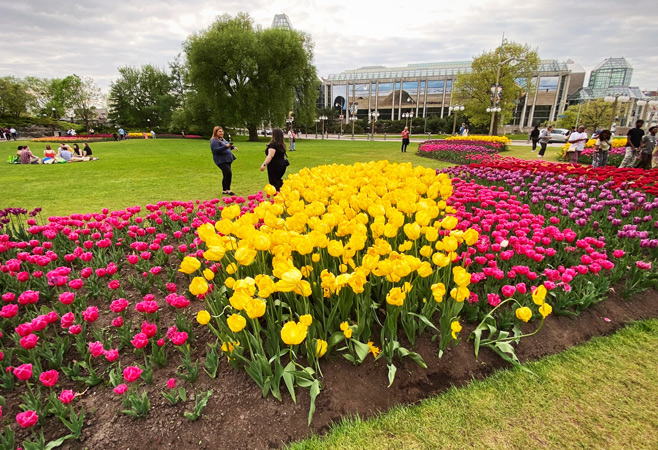
Over 11 days each May, the Canadian Tulip Festival celebrates the seasonal flower’s beauty and its historic ties to Canada’s capital
Historical Origins of the Canadian Tulip Festival
The origins of the Canadian Tulip Festival date back to the period of struggle and exile of the Dutch Royal Family during World War II. When the Nazis invaded the Netherlands in 1940, Princess Juliana and her family fled to Canada. Ottawa became their temporary home, providing shelter and protection during one of the darkest periods in European history.
In 1943, Princess Margriet was born at the Ottawa Civic Hospital. The Canadian government temporarily made the maternity ward extraterritorial to make sure that the baby had Dutch citizenship. This remarkable act symbolized the unity and strong bond between Canada and the Netherlands.
When the war finally came to an end, and the Netherlands was liberated (with the help of Canadian soldiers), the Dutch Royal Family expressed their gratitude by sending 100,000 tulip bulbs to Canada. That has continued to this day, when the Netherlands still sends tulip bulbs as a token of everlasting friendship.
In 1953, photographer Malak Karsh initiated the first official Canadian Tulip Festival. What once started as a small festival has now evolved to become a global cultural phenomenon.
Tulip Displays and Floral Attractions
The largest tulip show is the Canadian Tulip Festival that adds color to the city of Ottawa every spring.More than a million tulip bulbs are planted across the city each year, creating a visually stunning landscape featuring a wide range of colors, shapes, and bloom varieties.The main attractions of the festival in terms of flora include the following:
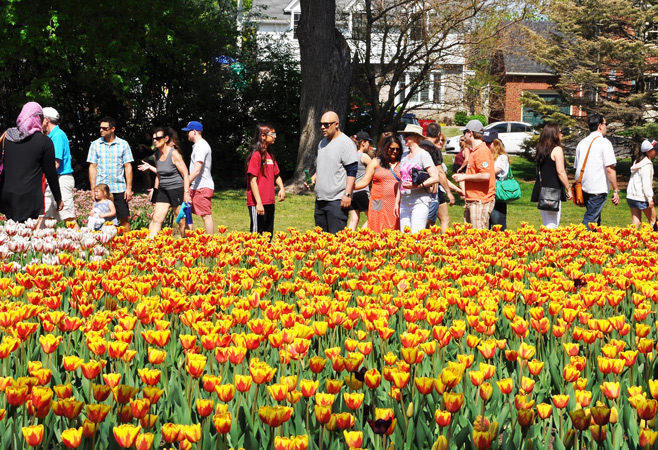
The Canadian Tulip Festival is more than just beautiful blooms; it's a living symbol of international friendship, remembrance, and the vibrant spirit of Ottawa
Commissioners Park at Dow’s Lake
Commissioners Park is the main focal point and most visited location of the Canadian Tulip Festival.It has thousands of planted tulips on the well-kept walking paths, and Dow’s Lake provides a picturesque natural backdrop to the festival.It is particularly a favorite place to visit in order to take photographs and to do some lazy sightseeing.
Variety of Tulip Types
The festival presents hundreds of tulip varieties each year, such as single-petal, double-flowered, fringed, and hybrid tulips.Depending on the stage of the bloom season, visitors may be able to observe a wide range of colors, which include red, yellow, pink, purple, white, and combinations of multi-colours.
Symbolic and Commemorative Plantings
Certain tulip beds are designed with symbolic and commemorative design features, which capture the historical background of the festival and how it celebrates friendship between Canada and the Netherlands.
Tulip Displays Across the City
Besides Commissioners Park, tulips are also planted in some popular places in Ottawa, such as Parliament Hill, Major Hill Park, and at some spots along the Rideau Canal.These smaller shows incorporate tulips in the historical and architectural landscape of the city.
Evolving Bloom Throughout the Festival
The growth of the various types of tulips flower in slightly different periods, and thus the displays vary gradually and continuously during the Ottawa Tulip Festival.Consequently, the visitors who come on other days will still be able to see fresh and colorful floral displays.
These tulip shows are the visual components of the Canadian Tulip Festival and have provided the visitors with a memorable experience of spring based on the beauty of nature and historical context.
Top things to do at the Canadian Tulip Festival
The Canadian Tulip Festival has a great variety of activities, except for observing flowers.Ranging from scenic walks to cultural experiences, the festival has it all to offer to every visitor.The following are the best things to look forward to when attending the festival.
Walk Through the Tulip Displays at Commissioners Park
The major attraction of the festival is Commissioners Park on Dow's Lake.Strolling the park allows tourists to view thousands of tulips in their blossom, planted in wide walkways with striking views of the lakes.It is where one can feel the grandeur and magnificence of the festival.
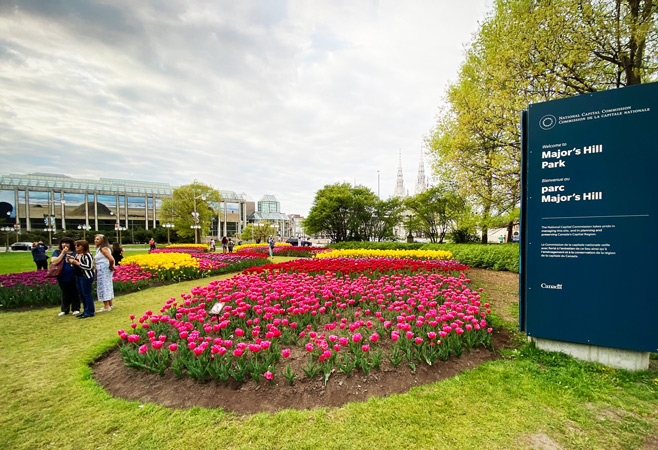
As one of the most visually stunning festivals in Canada, this celebration of spring is a must-visit for photographers, nature lovers, and those who love flowers
Take Photos at Iconic Locations
The festival is a paradise for photography enthusiasts.Dow Lake, Parliament Hill, and Major Hill Park are the most popular photographic locations where colourful tulips are contrasted with old structures.The most natural light is found in the morning or during the afternoon.

The Canadian Tulip Festival isn't just an event for tourists - locals are passionate about it as well
Enjoy Cultural and Live Entertainment
During the festival, visitors can enjoy live music performances, cultural shows, and small exhibitions.These activities tend to bring to the fore the Canadian and Dutch cultures, helping visitors better understand the festival’s background and significance.
Try Local and Dutch-Inspired Food
Food trucks and temporary booths offer a range of food, such as Canadian street food, as well as Dutch-inspired snacks.Tasting local food and sightseeing throughout the festival are essential parts of the overall experience.
Explore the Area by Walking or Cycling
Strolling or cycling around Dow's Lake is a stress-free method of enjoying the many tulip displays.The area is easy to explore thanks to well-maintained paths that connect different parts of the festival.
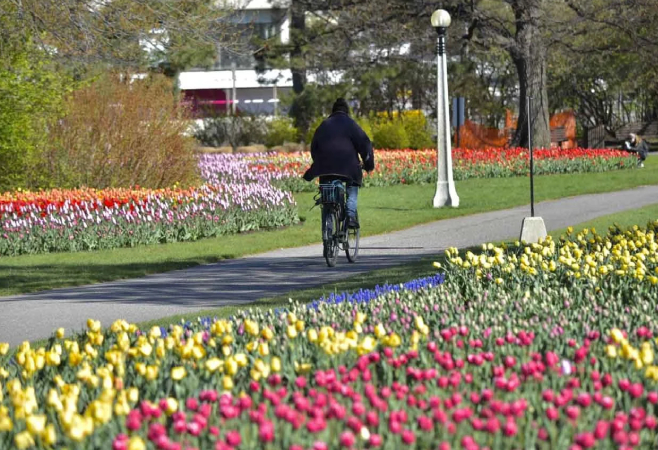
This scenic route connects the main festival sites and offers beautiful views of the water.
Visit with Family and Children
The Canadian Tulip Festival is also child-friendly, and there are open areas where children can play around and have activities that they can engage in, as well as walking paths that are freely available.It is a good outdoor activity for visitors of all ages.
Learn About the Festival’s History
There are informational signs and exhibits, as well as guided activities that interpret the historical relationship between Canada and the Netherlands.Learning about this history adds cultural depth and meaning to the festival experience.
All these activities combine to make the Canadian Tulip Festival a great spring event that is full of natural beauty, culture, and outdoor fun.
Best Places to Experience the Canadian Tulip Festival
The Canadian Tulip Festival is hosted in various scenic locations around Ottawa, which provide visitors with a chance to observe the tulips in the city that is also identified by its iconic landmarks.These are the best places to experience the festival.
Commissioners Park (Dow’s Lake)
Commissioners Park is the main location of the Canadian Tulip Festival and is widely considered the best place to see tulips in Ottawa.The park lies on the beautiful shores of Dow’s Lake, and one can observe long and features long, well-maintained walking paths lined with thousands of blooming tulips.
This blend of colorful exhibits of flowers, transparent lakes, and open green spaces makes it one of the most popular places for people who wish to visit and take pictures.Commissioners Park features the highest concentration of tulips at the festival, and is an experience to remember when springtime comes to Ottawa.
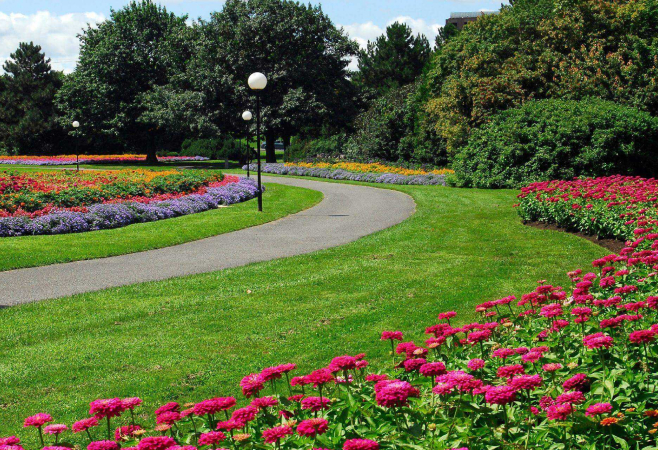
Commissioners Park is the official site of the Canadian Tulip Festival, and has the most spectacular display of tulips in the Ottawa region
Dow’s Lake Boardwalk
The boardwalk at Dow’s Lake is among the most relaxing grounds to experience the Canadian Tulip Festival.Adjacent to Commissioners Park is the boardwalk, which is a serene site with a spectacular lake and tulip beds of a variety of colors.
The guests will get a chance to take a scenic walk on the waterside, snap photos of tulips on the surface of the lake, or simply sit and enjoy the spring landscape.Its elevated walking and cycling paths provide a comfortable option, especially when families and visitors wish to have an easy time out of the overly crowded festival area.
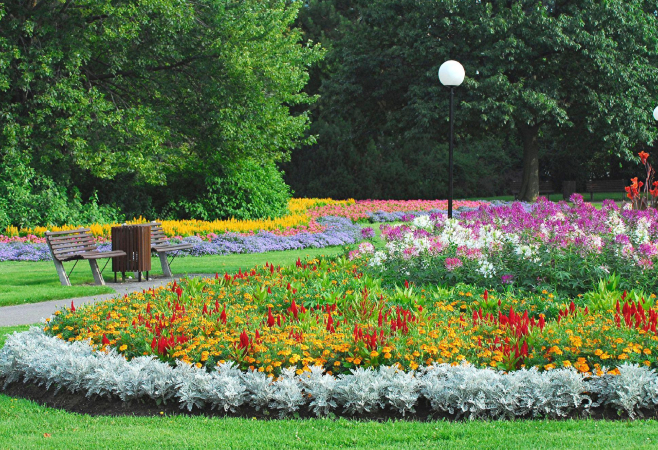
The Dow’s Lake Boardwalk is the scenic heart of the Canadian Tulip Festival
Parliament Hill
One of the most symbolic areas to experience the Canadian Tulip Festival is Parliament Hill.During spring, the colorful beds of tulips can be seen in the backdrop of the historic government buildings of Canada, which have a very high contrast between nature and architecture.
Parliament Hill is the ultimate destination of the visitor to view tulips in Ottawa because it is the location where it has colorful floral plants, in addition to the city and the Ottawa River scenic outlook.It is also a popular photography spot that captures the essence of Canada’s heritage during the spring tulip season.

Experience the beauty of Ottawa in full bloom with the Canadian Tulip Festival
Major’s Hill Park
The Majors Hill Park is situated next to the National Gallery of Canada and has smaller, well-positioned tulip beds.It is a picturesque spot to explore during the festival because it has very high views of Parliament Hill and Ottawa.
Rideau Canal Area
The historic waterway also has tulip beds in specific regions of the Rideau Canal that are utilized to beautify the canal.This is where one can walk or ride a bicycle to best enjoy the flowers that are on display and the UNESCO World Heritage sites.
Together, these places present the beauty and the scale of the Canadian Tulip Festival and offer the visitors an assortment of choices to experience the transformation of Spring in Ottawa.
Tourism and Visitor Experience
One of the greatest tourism activities in Ottawa is the Canadian Tulip Festival. It attracts hundreds of thousands of tourists every year, making a significant contribution to the local economy and hospitality sector.
First-time visitors should come in the morning or during weekdays to avoid massive crowds, mostly at Commissioners Park. Visitors should wear comfortable walking shoes, as most festival attractions are located within walkable park areas.
Ottawa has a well-developed public transportation system that makes it easy to reach festival sites, and there are cycling facilities that surround Dow’s Lake that offer a green way of venturing in the city.
Sustainability and Community Involvement
Over the last couple of years, the Canadian Tulip Festival has placed a strong emphasis on sustainability. Gardening practices have become more environmentally friendly, with organizers focusing on soil conservation, water management, and planting pollinator-friendly species.
Another key factor behind the festival’s success is its strong community involvement. Volunteers are essential for events, providing directions to visitors and running displays. Educational programs are also offered by schools and local organizations to educate students on matters of horticulture, history, and environmental stewardship.
These efforts help ensure that the festival remains relevant and socially responsible in today’s world.
Essential Tips for Your Canadian Tulip Festival Experience
To enjoy your visit to the Canadian Tulip Festival, a bit of planning is helpful. The following are the key tips that can help you have a seamless experience at the festival, as well as critical information regarding tickets and opening hours.
Know the Ticket Policy
The Canadian Tulip Festival is a free public event. No general admission ticket is needed to visit tulip display areas like Commissioners Park, Dow’s Lake, or other parts of the city. Nevertheless, certain special events, tours, or concerts that occur during the festival may require individual tickets; so it is recommended to check the official festival program in advance.
Master the "Tulip Commute"
- Parking near Commissioners Park (Dow’s Lake) is notoriously difficult and often fills up by 10:00 AM.
- The O-Train is your best option: Take Line 2 (the Trillium Line) directly to Dow’s Lake Station, which is just steps away from the main tulip displays.
- Park at Carleton University: Use Lot P7 at Carleton University. It is an easy eight-minute walk to the festival grounds and usually offers better availability than nearby residential streets.
- The Tulip Shuttle: Look for the “Tulip Tour” shuttle, which often operates from York Street in the ByWard Market and provides a convenient $5 round-trip ride to the main festival site.
Time Your Visit for the Best Light (and Fewer People)
- The Early Bird Rule: Arrive before 9:00 AM. You’ll get the "Golden Hour" light for photos, and you won't have to wait in line for food or the Tulip Boutique.
- Mid-Week Magic: If possible, visit between Monday and Thursday. Weekends are significantly more crowded with tour groups.
- Nighttime Vibes: Don't leave at sunset! The Blacklight Boardwalk begins at 9:15 PM at Dow’s Lake, offering a glowing, neon-lit view of the flowers.
Visit at the Right Time of Day
Visiting on weekdays or in the morning can help you avoid large crowds. Weekends and midday hours are typically the busiest times, especially at Commissioners Park.
Wear Comfortable Clothing and Shoes
The festival is a very walk-intensive experience. Wearing comfortable shoes and light clothes and clothing appropriate to the weather is necessary since the weather in Ottawa can vary during the day.
Use Public Transportation or Walk
Parking spaces around festival areas may be limited. The city of Ottawa has a good transportation infrastructure and walking paths that are close to each other, and hence moving to and out of tulip sites is not a stressful event.

Free parking is available for a limited time on some side streets around Commissioners Park
Plan for Photography
When photography is at the top of the list, visit early morning or late afternoon when the light is not intense. Carry a phone or camera that has sufficient charge since there are scenic points everywhere.
Check Weather and Bloom Updates
The blooming of tulips is weather-determined. It is always a good idea to check the updates before you visit, as this way you are sure that the flowers are in their best condition when you get there.
These tips will ensure that you have a relaxing and memorable experience of the Canadian Tulip Festival, and be prepared.
Conclusion
The Canadian Tulip Festival is not a mere spring festival but a special mix of nature, history, and cultural interconnection that cannot be forgotten by people who come to visit it. Turning spectacular tulip shows into a search for meaningful tales of foreign friendship, the festival is an unforgettable experience in the heart of Ottawa. It can be either a nature lover, a photographer, or a cultural traveler, but this event is worth planning your trip around.
In case you are coming to Canada to enjoy the Canadian Tulip Festival, you must make sure that your travel paperwork is in place. Travelers should register to get a Canada ETA online via Canada Immigration Services to allow them to enter the country with a smooth and easy process and enjoy the festival fully.