
Top Fascinating Facts About Canada: 24 Amazing Facts About Its History, Nature & Culture
Updated: July 21, 2026
Planning a trip to the Great White North? Whether you are mapping out a road trip through the rugged Canadian Rockies, plotting a food tour in Montreal, or heading to the rugged coasts of Nova Scotia, Canada is a country that instantly captures the imagination.
But before you pack your bags and head to the airport, it helps to understand the quirky, massive, and incredibly diverse nature of this North American giant.
To help you prep for your journey, we’ve rounded up seven fun facts about Canada that are actually useful for travelers. Let’s dive in!
Geography Facts About Canada
1. Canada Is the Second-Largest Country in the World
Canada covers approximately 9.98 million square kilometers, making it the second-largest country on Earth after Russia.
Despite its enormous size, Canada has a population of only about 42 million people, meaning vast stretches of wilderness remain untouched. Visitors can enjoy uncrowded national parks, scenic highways, and countless outdoor adventures.
Travel tip: Don't underestimate travel distances. Flying between provinces is often the fastest and most practical option.
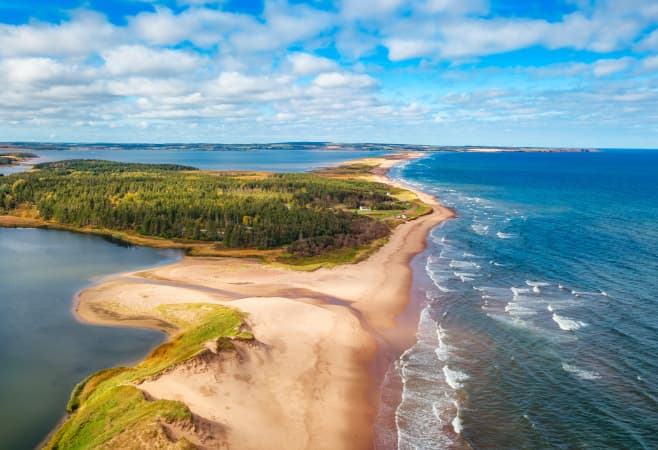 Canada has the world's longest coastline, spanning three oceans
2. Canada Has the Longest Coastline on Earth
Canada's coastline stretches more than 243,000 kilometers, bordering three oceans:
- Atlantic Ocean
- Pacific Ocean
- Arctic Ocean
This incredible coastline offers endless opportunities for whale watching, kayaking, hiking, surfing, and scenic coastal drives.
3. The Bay of Fundy Has the World's Highest Tides
Located between Nova Scotia and New Brunswick, the Bay of Fundy experiences the highest tides on Earth. Water levels can rise and fall by up to 16 meters (52 feet) twice a day.
Visitors can walk on the ocean floor at low tide and return just hours later to see the same area completely submerged.
4. Canada Has More Lakes Than Any Other Country
Canada contains more lakes than any other country, accounting for roughly 60% of the world's natural lakes larger than 0.1 hectare.
Ontario alone has over 250,000 lakes.
For travelers, this means spectacular scenery is never far away. From the turquoise waters of Lake Louise in Alberta to the canoe routes of Algonquin Provincial Park in Ontario, lakes are part of everyday Canadian life.
5. Canada Spans Six Primary Time Zones
Because Canada stretches nearly 5,500 kilometers from east to west, it covers six primary time zones:
- Pacific Time
- Mountain Time
- Central Time
- Eastern Time
- Atlantic Time
- Newfoundland Time
Traveler tip: A flight from Vancouver to Toronto takes around 4.5 hours, but you'll also lose three hours because of the time difference.
6. You Can Visit Arctic Canada
Many visitors are surprised to learn that Canada extends well into the Arctic.
Northern Canada offers unforgettable experiences, including:
- Midnight sun during summer
- Polar nights in winter
- Arctic wildlife
- Inuit culture
- Remote tundra landscapes
This region feels completely different from southern cities like Toronto, Montreal, or Vancouver.
7. Canada Even Has a Semi-Desert
But Canada is not all snow and trees. The Okanagan Valley of British Columbia has a semi-arid desert climate with precipitation of less than 25cm per year. It's a known region for vineyards, wineries, warm summers, and peculiar wildlife, making it one of the most unexpected travel destinations in Canada.
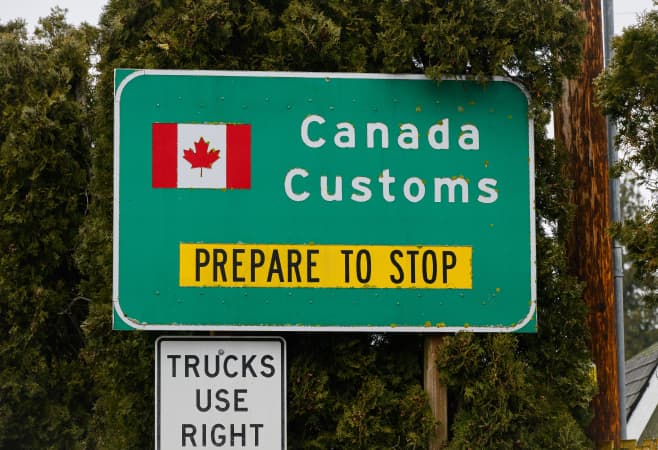 Canada and the United States share the world's longest international land border
Nature and Wildlife Facts
8. Canada Is One of the Best Places to See the Northern Lights
Canada offers excellent opportunities to witness the Aurora Borealis.
Top viewing destinations include:
- Yukon
- Northwest Territories
- Northern Manitoba
- Northern Saskatchewan
- Northern Alberta
The best viewing season is generally from September to March, when long, dark nights provide ideal conditions.
9. The Beaver Is Canada's National Animal
The beaver played a vital role in Canada's early fur trade and helped shape the country's history.
Today, you'll find the beaver featured on Canadian coins, government symbols, souvenirs, and even in the wild throughout wetlands and national parks.
10. Churchill is the Polar Bear Capital of the World
Each autumn, polar bears gather near Churchill as they wait for Hudson Bay to freeze, allowing them to hunt seals on the sea ice. Churchill is one of the best places to see these amazing creatures while on a specially designed Tundra Buggy.
Travelers can safely observe these incredible animals aboard specially designed Tundra Buggies, making Churchill one of the world's premier wildlife destinations.
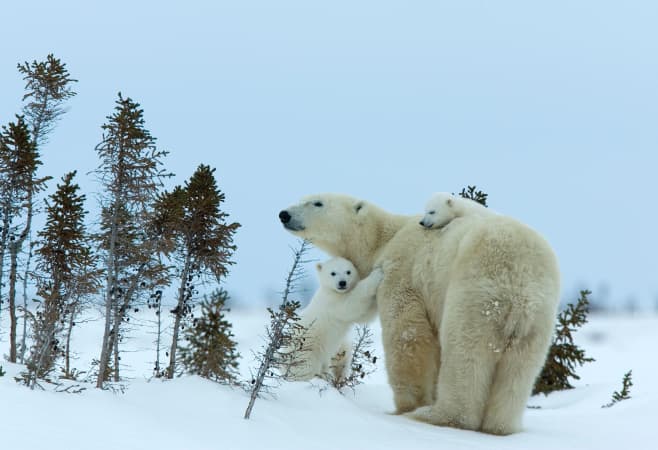 Polar bears can be found in Canada
National Parks and Outdoor Adventure Facts
11. Canada Has More Than 40 National Parks
Canada protects more than 40 national parks and national park reserves, preserving everything from glaciers and mountains to rainforests and Arctic tundra.
Some of the country's most famous parks include:
- Banff National Park
- Jasper National Park
- Yoho National Park
- Gros Morne National Park
- Pacific Rim National Park Reserve
If you're planning to visit several parks, purchasing a Parks Canada Discovery Pass can help save money.
12. Niagara Falls Is One of Canada's Most Famous Natural Attractions
Shared by Canada and the United States, Niagara Falls attracts millions of visitors every year.
The Canadian side offers spectacular panoramic viewpoints, boat cruises, walking trails, observation towers, and nightly illuminations that make the falls even more impressive after sunset.
13. The Trans-Canada Highway Is One of the World's Greatest Road Trips
Stretching approximately 7,800 kilometers, the Trans-Canada Highway connects most provinces from the Atlantic to the Pacific.
Along the journey, travelers can experience:
- The Rocky Mountains
- Prairie grasslands
- Historic towns
- Coastal villages
- National parks
- Beautiful lakes and forests
Many visitors spend weeks exploring just a portion of this legendary route.
Culture and People Facts
14. One of the world's largest French-speaking cities is Montreal
There are two official languages in Canada: English and French.
Montreal is one of the world's largest French-speaking cities outside Europe and the largest in North America, providing the unique opportunity to experience European culture, all without crossing the Atlantic Ocean.
French is used on signs and in restaurants, and of course in daily conversation, in Quebec.
15. Canadians Are Famous for Saying "Sorry"
It's not a cliché, but Canadians are known around the world for their politeness.
Ontario's Apology Act, 2009 clarifies that saying "sorry" does not automatically constitute an admission of legal liability in many civil matters. To Canadians, saying sorry is just an acceptable and polite expression of caring and concern.
16. Toronto Is One of the World's Most Multicultural Cities
More than half of Toronto's residents were born outside Canada. As a result, visitors can enjoy:
- Authentic international cuisine
- Cultural festivals
- Diverse neighborhoods
- Global shopping experiences
No matter where you're from, you'll likely find a familiar community—and discover many new cultures along the way.
Food and Drink Facts
17. Canada Produces Most of the World's Maple Syrup
Canada produces approximately 70–75% of the world's maple syrup, with Quebec accounting for the vast majority.
Visitors can:
- Tour traditional sugar shacks
- Watch maple syrup production
- Taste maple taffy poured over fresh snow
- Purchase authentic maple products
Spring is the best time to experience maple syrup festivals.
18. Canada Offers More Than Maple Syrup
While maple syrup is Canada's most famous food, travelers should also try:
- Poutine – crispy fries topped with cheese curds and gravy.
- Butter tarts – a classic Canadian pastry with a sweet, buttery filling.
- Nanaimo bars – a no-bake dessert made with chocolate, custard, and coconut.
- Canadian ice wine – a world-famous dessert wine made from naturally frozen grapes.
Sampling local specialties is one of the easiest ways to experience Canada's regional culture.
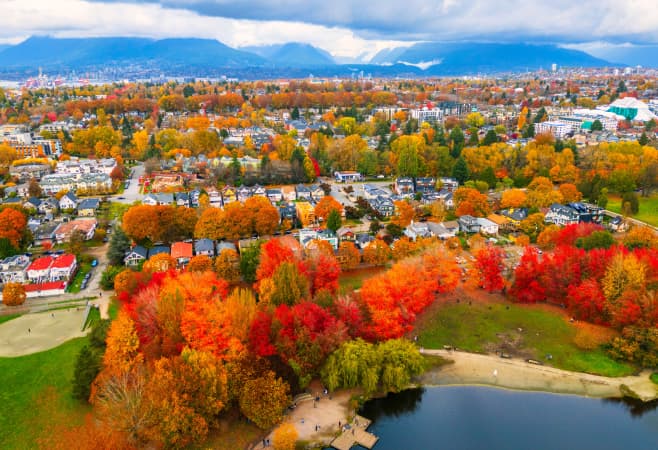 Canada's maple leaf is a national symbol, and the country produces most of the world's maple syrup
Sports and Recreation Facts
19. Ice Hockey Is Canada's National Winter Sport
Few sports are as closely tied to Canada's identity as ice hockey. During winter, visitors can watch:
- NHL games
- Community leagues
- Outdoor pond hockey
- Youth tournaments
Watching a live hockey game is an unforgettable Canadian experience.
20. The Rideau Canal Becomes the World's Largest Skating Rink
Every winter, Ottawa's Rideau Canal transforms into the world's largest naturally frozen skating rink, stretching approximately 7.8 kilometers.
Locals skate to work, families spend weekends on the ice, and visitors can warm up with hot chocolate and the famous "BeaverTail" pastry along the route.
Money and Everyday Life Facts
21. The "Loonie" and "Toonie" Are Canadian
Long before this, Canada had substituted its paper $1 and $2 bills for coins.
The common loon bird is on the $1 coin, which is known as the Loonie.
The $2 coin earned the nickname of the Toonie, which is a combination of "two" and "Loonie".
These nicknames are widely recognized by Canadians and visitors alike.
22. Canada's Banknotes Are Made of Polymer
Canadian dollar bills are made of tough polymer instead of paper. They are waterproof, extremely hard to counterfeit, and designed with clear security windows that are easy to identify.
Historical Facts About Canada
23. The Beaver Played a Major Role in Canada's Early History
The fur trade had an impact on the Canadian economy long before it became a major source of income.
The pelting of beavers was one of the most significant early trading exports and a major impetus for exploration and the formation of many early settlements. The beaver is still one of the most recognized symbols of Canada today.
24. Canada became a country in 1867
Canada became a self-governing Dominion on July 1, 1867, when the British North America Act (now the Constitution Act, 1867) united Ontario, Quebec, Nova Scotia, and New Brunswick. Canadians celebrate this anniversary each year as Canada Day.
The country today is divided into 10 provinces and 3 territories with different landscapes, cultures, and traditions.
Conclusion
Canada is full of fascinating surprises that go far beyond maple syrup and snowy winters. From the world's longest coastline and millions of pristine lakes to Arctic adventures, multicultural cities, and unforgettable wildlife experiences, every region has its own story to tell.
Learning these fun facts before your trip will help you appreciate Canada's history, landscapes, and culture while inspiring you to explore more than just the country's famous attractions. Whether you're planning a weekend city break or a cross-country road trip, Canada is a destination that rewards curiosity at every turn.