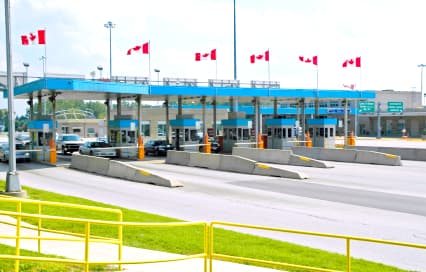
Major Cities in Canada: Best Places to Visit and Explore
Updated: August 14, 2026
Canada’s major cities offer very different travel experiences, from Toronto’s museums and neighborhoods to Vancouver’s coastal setting and Québec City’s historic district. From cosmopolitan hubs like Toronto and Vancouver to historic destinations such as Québec City and Halifax, each city offers a unique travel experience. Whether you're visiting for sightseeing, business, outdoor adventures, or cultural festivals, exploring Canada's cities is one of the highlights of any trip.
10 Major Canadian Cities to Visit
| City | Province | Known for | Best time to visit |
|---|---|---|---|
| Toronto | Ontario | CN Tower, multicultural neighborhoods, sports | May–October |
| Vancouver | British Columbia | Mountains, beaches, Stanley Park | April–October |
| Montreal | Quebec | French culture, festivals, cuisine | June–September |
| Calgary | Alberta | Calgary Stampede, Rocky Mountains gateway | June–September |
| Ottawa | Ontario | Parliament Hill, museums, Rideau Canal | May–October |
| Québec City | Quebec | Old Québec, European charm | June–October |
| Halifax | Nova Scotia | Waterfront, seafood, maritime history | June–September |
| Winnipeg | Manitoba | Museums, arts, polar bear exhibits | May–September |
| Edmonton | Alberta | West Edmonton Mall, river valley | June–September |
| Victoria | British Columbia | Gardens, historic architecture, whale watching | May–September |
Best Canadian Cities to Visit
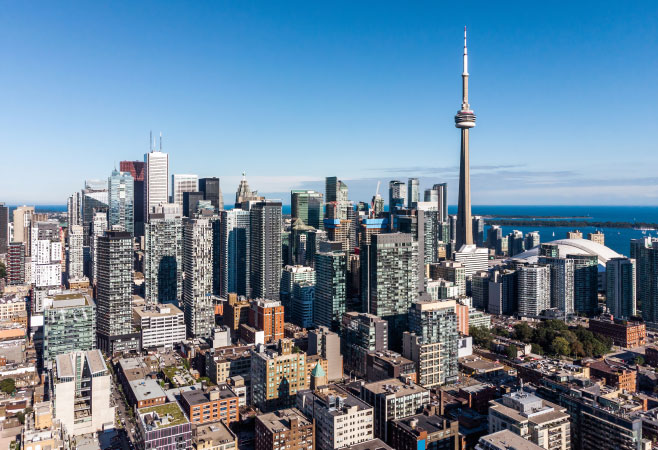 Aerial view of downtown Toronto, where modern skyscrapers meet distinctive urban architecture
1. Toronto – Canada's Largest City
Toronto is Canada's financial and cultural center, attracting millions of visitors every year. The city's skyline is dominated by the iconic CN Tower, while diverse neighborhoods showcase cultures from around the world.
Top attractions in Toronto:
- CN Tower
- Ripley's Aquarium of Canada
- Royal Ontario Museum
- Distillery Historic District
- Toronto Islands
- Kensington Market
Toronto is also an excellent base for day trips to Niagara Falls, located about 130 km (80 miles) away.
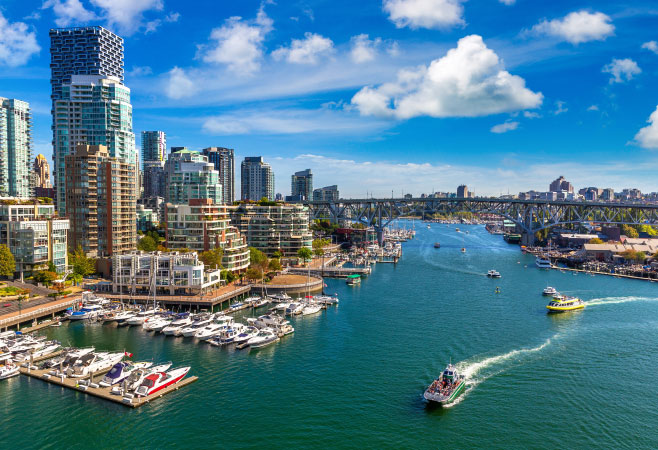 Scenic aerial view of False Creek, Vancouver, with the city skyline in the background
2. Ottawa – Canada's Capital City
Ottawa offers visitors a mix of history, politics, and culture. The city's compact downtown makes it easy to explore on foot.
Popular attractions to visit in Ottawa:
- Parliament Hill
- Rideau Canal
- Canadian Museum of History
- National Gallery of Canada
- ByWard Market
When conditions permit, the Rideau Canal becomes the Rideau Canal Skateway, the world’s largest skating rink.
3. Vancouver – Where Nature Meets The City
Surrounded by mountains and the Pacific Ocean, Vancouver combines a dense urban core with easy access to beaches, parks, and nearby mountains. Visitors can enjoy outdoor activities without leaving the city.
Must-see places in Vancouver:
- Stanley Park
- Capilano Suspension Bridge
- Granville Island
- Gastown
- English Bay Beach
- Grouse Mountain
Vancouver is also the departure point for cruises to Alaska and trips to Vancouver Island.
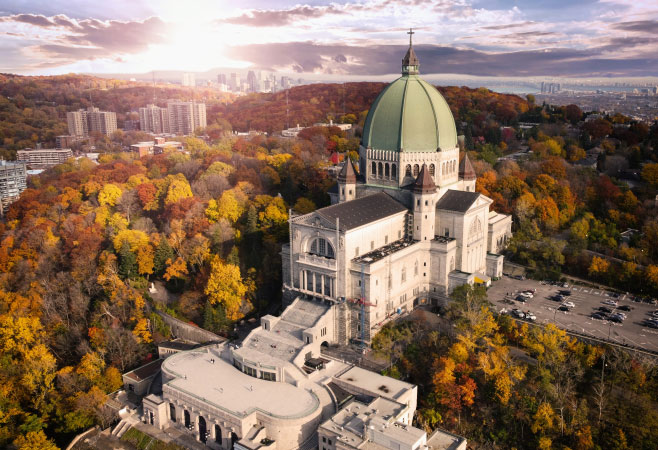 Montreal’s Saint Joseph’s Oratory surrounded by colorful autumn foliage
4. Montreal – Canada's Cultural Capital
Montreal blends North American energy with European charm. French is the primary language, giving the city a distinctive atmosphere unlike anywhere else in Canada.
Highlights include:
- Old Montreal
- Notre-Dame Basilica
- Mount Royal Park
- Jean-Talon Market
- Montreal Museum of Fine Arts
The city is famous for international festivals, live music, and culinary specialties such as smoked meat sandwiches and bagels.
5. Québec City – A Taste of Europe
Québec City is one of North America’s oldest cities, and its historic district, Old Québec, is recognized as a UNESCO World Heritage Site. Walking through Old Québec feels like stepping into Europe with its cobblestone streets and centuries-old buildings.
Don't miss things in Québec City:
- Château Frontenac
- Old Québec
- Terrasse Dufferin
- Plains of Abraham
- Petit-Champlain District
Winter Carnival is one of Canada's most famous annual events.
6. Calgary – Gateway to The Canadian Rockies
Calgary combines modern urban living with western heritage. It is also a major gateway to Banff National Park and the southern Canadian Rockies.
Top attractions in Calgary:
- Calgary Tower
- Calgary Zoo
- Heritage Park
- Prince's Island Park
- Calgary Stampede (July)
Many travelers choose Calgary as the starting point for exploring the Rocky Mountains.
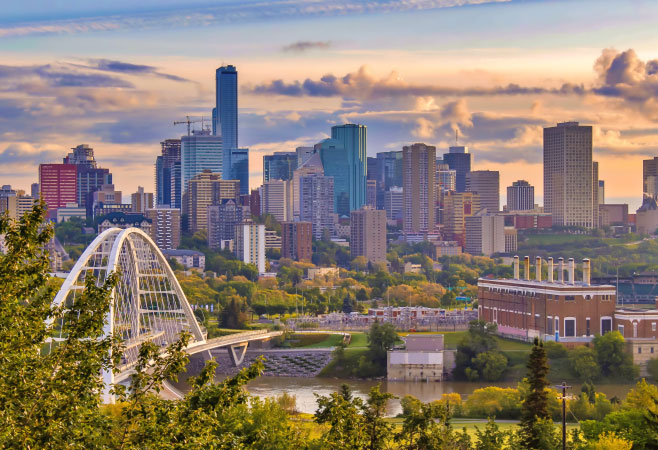 Scenic view of Edmonton featuring modern skyscrapers
7. Edmonton – River Valley And Urban Adventure
Edmonton is known for its sprawling river valley park system — one of the largest urban park systems on the continent — along with major shopping and entertainment at West Edmonton Mall.
Top attractions in Edmonton:
- West Edmonton Mall
- River Valley Parks
- Fort Edmonton Park
- Art Gallery of Alberta
- Old Strathcona
Edmonton makes a great stop for travelers looking for outdoor recreation without straying far from the city center.
8. Victoria – The Garden City
Located on Vancouver Island, Victoria is known for its mild climate, colorful gardens, and British colonial architecture.
Best places to visit:
- Butchart Gardens
- Inner Harbour
- Royal BC Museum
- Craigdarroch Castle
- Fisherman's Wharf
Whale-watching tours are among the city's most popular activities.
9. Halifax – Canada's Atlantic Gem
Halifax is the largest city in Atlantic Canada and offers beautiful waterfront views, fresh seafood, and fascinating maritime history.
Popular attractions:
- Halifax Waterfront
- Citadel Hill
- Peggy's Cove
- Maritime Museum of the Atlantic
- Public Gardens
Fresh lobster and scallops are local specialties visitors should not miss.
10. Winnipeg – Museums, Arts, And The Heart of The Continent
Winnipeg is known for its vibrant arts and museum scene, along with its unique geographic claim as one of the cities located within Canada, and is known for its museums, arts scene, and The Forks historic district.
Top attractions:
- Canadian Museum for Human Rights
- The Forks
- Assiniboine Park & Zoo (home to polar bear exhibits)
- Winnipeg Art Gallery
- Exchange District
Winnipeg is also known for cold winters, with temperatures regularly falling below −30°C (−22°F) during cold spells, so visitors are best off planning around the summer months.
Interesting Facts About Canadian Cities
Toronto is Canada's largest city by population.
Montréal is one of the world's largest French-speaking cities and the largest in North America.
Ottawa was chosen as Canada's capital by Queen Victoria in 1857.
Vancouver is one of the warmest major cities in Canada during winter.
Old Québec is the only intact fortified city north of Mexico.
Calgary hosted the 1988 Winter Olympics.
Winnipeg is located near the geographic center of North America.
Edmonton has one of the largest urban park systems on the continent.
Choosing the Right City for Your Trip
| Traveler Type | Best-Fit Cities |
|---|---|
| First-time visitors wanting iconic landmarks | Toronto, Vancouver, Quebec City |
| Food, culture, and nightlife enthusiasts | Montreal, Toronto |
| Outdoor adventure and mountain scenery | Calgary, Vancouver |
| History and architecture lovers | Quebec City, Ottawa |
| Budget-conscious or off-the-beaten-path travelers | Winnipeg, Edmonton |
Practical Travel Guide for Visitors
Best Time to Visit
Summer (June–August): Warm weather, outdoor festivals, and long daylight hours. This is the busiest and most expensive season.
Spring & Fall (May–June, September–October): Pleasant temperatures, fewer crowds, and better hotel rates—ideal for most travelers.
Winter (December–March): Best for skiing, Christmas markets, and winter festivals. Expect cold weather, especially in central and eastern Canada, while Vancouver remains relatively mild.
Getting Around
Domestic flights are the fastest way to travel between distant cities such as Toronto and Vancouver.
VIA Rail connects major cities in Ontario and Québec and offers scenic rail journeys.
Public transit is reliable in Toronto, Montréal, Vancouver, Ottawa, and Calgary, making it easy to explore without a car.
Car rentals are recommended for visiting national parks, scenic routes, and smaller towns but are less practical in busy city centers due to parking costs.
Budget Guide
Canada is generally an expensive destination.
- Budget accommodation: CAD 80–150 per night
- Mid-range hotels: CAD 180–350 per night
- Casual meals: CAD 15–25
- Restaurant dining: CAD 30–60+ per person
Traveling during the shoulder season, using public transportation, and visiting free attractions can help reduce costs.
Entry Requirements
Most travellers need either a visitor visa or an Electronic Travel Authorization (eTA) to travel to Canada. The requirement depends on your nationality, travel document, and method of travel, so check the latest IRCC guidance before your trip.
Useful Travel Tips
- Canada spans six time zones, so flying is often the best option for long-distance travel.
- Weather varies greatly by region—pack according to your destination and season.
- The official currency is the Canadian Dollar (CAD), and credit or debit cards are widely accepted.
- Tipping 15–20% is customary in restaurants, taxis, and many service industries.
- English is spoken across Canada, while French is the primary language in Québec.
- Purchase travel insurance and book accommodation early if traveling during summer or major festivals.
Suggested Itineraries
7–10 days
Toronto → Niagara Falls → Montréal → Québec City
- Western Canada: Vancouver → Victoria or Whistler
- Rocky Mountains: Calgary → Banff → Lake Louise → Jasper
Two-week Trip
Combine Eastern Canada (Toronto, Ottawa, Montréal, Québec City) with Vancouver or Calgary by domestic flight.
FAQs About Cities in Canada
How many cities are there in Canada?
There is no single nationwide count because each province and territory determines which municipalities are officially designated as cities. Canada has well over 100 incorporated cities and thousands of municipalities of different types.
What are the biggest cities in Canada?
Toronto is Canada's largest city, followed by Montreal and Calgary. Other major cities include Ottawa, Edmonton, Winnipeg, and Vancouver, all serving as important economic and cultural centers.
What are the most popular cities in Canada for tourists?
Toronto, Vancouver, Montreal, Québec City, Ottawa, and Calgary are among Canada's top tourist destinations. They offer famous landmarks, museums, festivals, diverse cuisine, and convenient transportation.
What are the most beautiful cities in Canada?
Many travelers consider Vancouver, Québec City, Victoria, and Halifax among Canada’s most scenic cities. For mountain scenery, the nearby town of Banff is another popular destination.
Which cities in Canada are French-speaking?
French is the primary language in most cities across Québec, including Montréal, Québec City, Sherbrooke, and Trois-Rivières. Ottawa and Moncton also have large bilingual communities.
What are some small cities worth visiting in Canada?
If you prefer quieter destinations, consider Charlottetown, Kingston, Fredericton, Whitehorse, and Nelson. These smaller cities offer historic attractions, local culture, and easy access to nature.
What are the warmest cities in Canada?
The warmest cities are mainly located in British Columbia, including Victoria, Vancouver, Nanaimo, and Kelowna, which enjoy relatively mild winters and pleasant year-round temperatures.
What are the coldest cities in Canada?
Among Canada's major cities, Winnipeg, Regina, and Edmonton experience some of the coldest winters. Temperatures can regularly fall below −30°C (−22°F) during cold spells.