Canada Super Visa for Parents: Requirements, Fees & How to Apply
Updated: April 17, 2026
The reunification of parents in Canada is a very important objective for a large number of families, and the Canada Super Visa for parents provides one of the most flexible options to support extended family visits. The Super Visa is specially targeted at parents and grandparents of Canadian citizens and permanent residents, and allows significantly longer stays than a regular visitor visa.
The application process is more detailed and requires careful preparation, including proof of family relationship, financial eligibility, and mandatory private medical insurance. Knowing these requirements early on can greatly enhance your probability of acceptance. Here, you are going to get straightforward, practical answers to how the Canada Super Visa program applies to parents, qualifications, and steps you should take to prepare and file a well-prepared and strong application.

A Super Visa can allow parents and grandparents to stay in Canada for up to five years per entry, subject to approval by a Canada Border Services Agency (CBSA) officer at the port of entry
What is a Super Visa for Canada?
The Canada Super visa is a long-term visa issued to parents and grandparents of Canadian citizens or permanent residents for multiple entries.It allows eligible applicants to stay in Canada for up to five years per entry, subject to approval by a border services officer.
Compared to a standard visitor visa, the Super Visa has more stringent eligibility requirements, such as demonstrating family ties, satisfying the minimum income requirements imposed by the Canadian host, and the requirement of purchasing Canadian-based private medical insurance.The Super Visa allows parents and grandparents to spend extended time with their families while ensuring health and financial safeguards are met.
How long can you stay in Canada on a Super Visa?
When a parent and a grandparent are on a Canada Super Visa, they may be authorized to remain in Canada for up to five years per entry, at the discretion of a CBSA officer, unless a shorter period is granted, unless a border services officer authorizes them to stay less. The Super Visa is usually issued as a multiple-entry visa for up to 10 years, or until the passport expires, whichever comes first.In addition, Super Visa holders may apply from within Canada for a visitor record to extend their authorized stay by up to two additional years, subject to IRCC approval.
Who qualifies for a Canada Super Visa for parents?
The Canada Super Visa for parents is only given to parents and grandparents of Canadian citizens or permanent residents; no other family members are eligible under the Super Visa program.Applicants should present clear legal documents that legally determine the close relationship of family, including birth certificates or official family documents.
Besides that, the child or grandchild in Canada needs to satisfy the minimum income requirement (LICO) and should file a formal letter of invitation with evidence of income and legal residence in Canada.Applicants must obtain private medical insurance from a Canadian insurance company with a minimum coverage of CAD 100,000, valid for at least one year. An effective immigration medical test is obligatory.Applicants must be admissible to Canada and satisfy immigration officers that they will leave Canada at the end of each authorized stay.
To be eligible for a super visa, you must have a host who is a Canadian citizen, a permanent resident of Canada, or a registered Indian under the Canadian Indian Act
Essential Canada Super Visa Requirements You Must Meet Before Applying
In order to be eligible for a Canada Super Visa, parents and grandparents should comply with the legal conditions established by Immigration, Refugees and Citizenship Canada (IRCC).The requirements define the qualification of an applicant to apply, as assessed by IRCC based on eligibility criteria and supporting documentation.
1. Valid Passport
The applicants should possess a valid passport issued by the respective countries of origin.The application of the Super Visa is directly related to the validity of the passport and the permissible period of stay.
2. Proof of Family Relationship
The applicants should be the parent or the grandparent of a Canadian citizen or permanent resident.Parent-child or grandparent-grandchild relationships are the only ones to take into consideration.
3. Letter of Invitation from the Child or Grandchild in Canada
The Canadian child or grandchild should issue a formal invitation to the applicant and assure him or her of financial support and accommodation on the visit.
4. Minimum Income Requirement (LICO)
The Canadian host must meet the Low Income Cut-Off (LICO) requirement to demonstrate the ability to financially support the visiting parent or grandparent.
5. Mandatory Medical Insurance
The applicant must obtain private medical insurance from a Canadian insurance company with a minimum coverage of CAD 100,000, valid for at least one year, and covering health care, hospitalization, and repatriation.
6. Immigration Medical Examination
The applicants have to pass the immigration medical examination conducted by an IRCC-approved panel physician and must be found medically admissible to Canada.
If you want to bring your parents or grandparents to Canada to stay with you for up to 5 years at a time, you must meet the eligibility requirements
Canada Super Visa 2026: A Complete Document Checklist for Parents and Grandparents
To apply for a Canada Super Visa, one must prepare the supporting documents carefully because it is necessary to prove that they are eligible, have the financial capacity, and meet the requirements of Canadian immigration laws.A successful application depends on the submission of complete, accurate, and well-organized documentation.
1. Application Forms
All Super Visa application forms must be completed accurately and truthfully.Applications are generally submitted online through the IRCC portal.
2. Passport and Photographs
There should be a valid passport and recent photographs that are in line with the specifications of IRCC.
3. Proof of Income and Financial Support
The child or grandchild in Canada must have documents showing that he or she satisfies the LICO requirement.Acceptable documents may include a Notice of Assessment (NOA), employment letters, pay slips, and a signed letter of invitation.
4. Medical Insurance Policy Documents
The applicants are required to provide evidence of a comprehensive medical insurance purchased in Canada by an insurance company that has been purchased to cover health care, hospitalization, and repatriation.
5. Medical Exam Confirmation
Confirmation of a completed immigration medical examination must be included in the application.
6. Additional Supporting Documents
Additional documents can also consist of evidence of relationship, travel history, and evidence of connection to the home country to prove the motive of the applicant to leave Canada after every authorized stay.
How to apply for a Super Visa for Canada?
The Canada Super Visa application involves several important steps that require careful planning, accurate documentation, and compliance with Canadian immigration laws. From checking eligibility and preparing mandatory financial and medical documents to the final stage of online application and the fulfillment of biometric and medical tests, each step has its significance in the general evaluation of the application.
This knowledge will guide parents and grandparents in advance to save time and minimize the risk of refusal, as well as create a complete and well-repaired Super Visa application.
If you are eligible, you can submit your application for a Canada supervisor in six easy steps
Step 1: Create an Online Account
Applicants should start by registering an online account on the IRCC secure portal through the official website, Canada.ca.The application system can be accessed using a GCKey or a Sign-In Partner.
Step 2: Complete the Application Forms
Complete all the necessary online application forms, such as IMM 5257 (Application for Visitor Visa) and the Family Information Form.Ensure that all information provided is accurate and supported by appropriate documentation.
Step 3: Upload Supporting Documents
Attach all the supporting documents, including a copy of the passport, evidence of relationship, evidence that the child or grandchild in Canada meets the Low Income Cut-Off (LICO) requirement, medical insurance documents, and photographs in accordance with IRCC requirements.
Step 4: Pay the Application Fees
Applicants must pay the required fees using a credit or debit card.This normally involves the visitor visa application fee (CAD 100) and, where necessary, the biometrics fee (CAD 85).These fees are subject to change and are generally non-refundable.
Step 5: Provide Biometrics
Once the application is submitted, applicants will receive a Biometrics Instruction Letter (BIL).Applicants must book an appointment at a recognized Visa Application Centre (VAC) to provide fingerprints and a photograph as required.
Step 6: Complete the Medical Examination
Applicants must undergo an immigration medical examination conducted by an IRCC-approved panel physician, as instructed by IRCC.The panel physician will submit the medical examination results directly to IRCC.
Canada Super Visa Processing Time: From Application to Approval
Canada Super Visa processing times are not fixed and may vary significantly depending on individual circumstances and IRCC’s workload.Processing could take several weeks to several months, depending on application volume, the applicant’s country of residence, and individual case factors.
The lack of documentation, such as incomplete proof of income under the Low Income Cut-Off (LICO), or the absence of fully paid private medical insurance, can present delays or further document requests.Processing can also be delayed if the biometrics or the immigration medical examination were not done immediately, because IRCC will not be able to complete the application before all the requirements are fulfilled.
Seasonal increases in application volumes may also extend processing times.To minimize delays, applicants are advised to apply online through the IRCC portal and ensure that all supporting documents, such as the host’s Notice of Assessment (NOA), are current and clearly scanned.

Processing times vary by country and individual circumstances and may range from several weeks to several months. Applicants should always refer to IRCC’s official processing time tool for the most current estimates
Entry to Canada with a Super Visa
Role of Border Officers
The Canada Super Visa allows parents and grandparents to travel to a Canadian port of entry, but does not guarantee admission.The final decision on entry is made by an officer of the Canada Border Services Agency (CBSA) upon arrival. CBSA officers do not reassess the Super Visa application itself, but they do verify that the traveler continues to meet all Super Visa conditions at the time of entry. They simply ensure that the traveler still satisfies the conditions of the Super Visa, such as the nature of the visit, valid private medical insurance, financial support arrangements, and general admissibility to Canada.
The border officer may let you stay for 5 years if you still meet all the eligibility requirements for a super visa
Authorized Length of Stay per Entry
Upon entry, Super Visa holders may be authorized to stay in Canada for up to five years per entry under the current policy, which is in effect until 2026. However, this maximum period of stay is not automatic.CBSA officers have the discretion to authorize a shorter period of stay if Super Visa conditions are not met upon arrival, especially in case medical insurance coverage does not cover the maximum period.
Visitor Record and Conditions
In some cases, a border officer may issue a visitor record at the port of entry.This document specifies the authorized length of stay and any conditions imposed during the visit.The visitor record is not a substitute for a Super Visa, but rather it is a regulatory document of the authorized stay of the visitor in Canada.Super Visa holders must adhere to all of the mentioned conditions, including the prohibition on working or studying in Canada without proper authorization.
Extending Your Stay in Canada on a Super Visa
If you are in Canada on a Super Visa and want to stay longer than the time you are originally permitted, you can seek an extension in Canada.Under the current policy, in effect until 2026, Super Visa holders may be authorized to remain in Canada for up to five years on a single entry.In addition, they can seek to get their stay extended by up to two years, pending the approval of Immigration, Refugees and Citizenship Canada (IRCC).
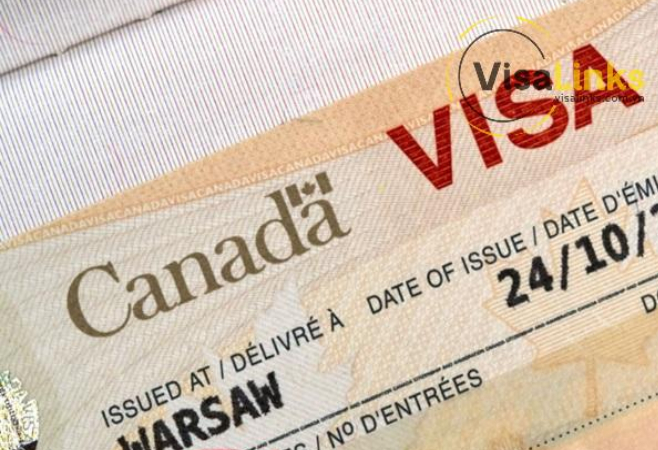
Super Visa holders can apply from within Canada to extend their stay for up to two additional years, depending on IRCC approval
1. When to Apply
Applicants must submit their extension application before their current status expires.It is highly advised that you apply at least 30 days beforehand.In case of a timely application, you can continue living in Canada on maintained status (previously stated as implied status), awaiting a decision, even though the period of your initial legally authorized residence has expired, pending the completion of the processing.
2. Required Documents for Extension
In order to prolong your stay, you have to seek a visitor record and not a new visa.The typical supporting materials are new evidence that your child or grandchild in Canada still qualifies according to the Low Income Cut-Off (LICO) condition and a new private medical insurance policy that is in accordance with Super Visa criteria.It should at least have a coverage of CAD 100,000 and cover health care, hospitalization, and repatriation.The family connection (e.g., birth certificates or prior documents submitted) should also be provided.
3. Application Method and Fees
Extension applications must be submitted online through the IRCC portal.The usual cost of the visitor record extension is CAD 100.Failure to provide biometrics within a period of ten years may lead to a payment of an extra CAD 85 and submission of biometrics at an identified service Canada center.
4. Processing Times and Important Considerations
The processing time of Super Visa extensions in-Canada can be altered and can take several months, depending on the workload of IRCC and other circumstances.Although maintained status means that you can continue to stay in Canada until the time the application is processed, you should avoid leaving Canada before the processing is completed, because this will make you lose maintained status and require a new application to re-enter Canada.
Canada Super Visa Cost: What Parents and Grandparents Need to Budget
The Canada Super Visa involves several mandatory expenses that applicants and their families should budget for carefully.These expenses are associated with applying for the visa and addressing Super Visa renewal requirements.
1. Super Visa Application Fee
The government processing fee for a Canada Super Visa application is CAD 100 per applicant.This fee is paid online through Immigration, Refugees and Citizenship Canada (IRCC) at the time of submission and is non-refundable, regardless of the application outcome.
2. Biometrics Fee
Most applicants are required to provide biometrics, including fingerprints and a photograph.The biometrics fee is CAD 85 per person, unless the applicant has already provided biometrics within the past 10 years.This fee is also non-refundable.
3. Immigration Medical Examination Cost
Applicants must undergo a mandatory immigration medical examination conducted by an IRCC-authorized panel physician.The cost varies by country and medical facility and is paid directly by the applicant to the panel physician.The fee is between CAD 100 and CAD 300 in most cases, but it can be higher in some areas.
4. Private Medical Insurance Cost
Private medical insurance is one of the most significant costs associated with the Super Visa.Applicants are required to purchase private medical insurance with a minimum coverage of CAD 100,000, valid for at least one year, covering health care, hospitalization, and repatriation.Annual insurance premiums typically range from CAD 1,000 to CAD 4,000 or more, depending on the applicant’s age, health condition, and level of coverage.The insurance policy must be fully paid and not merely a quotation.
5. Additional Expenses
Additional expenses may include document translation, notarization, photocopying, courier services, and professional fees if a visa service provider is used.Such costs depend on personal situations.
Top Common Reasons for Canada Super Visa Refusals
Despite the benefits of the Canada Super Visa, such a visa can be denied when Immigration, Refugees and Citizenship Canada (IRCC) cannot be convinced that all conditions are met.The most common reasons for refusal are given below.
- Failure to Meet Income Requirements
One of the most common reasons for refusal is that the child or grandchild does not meet the Low Income Cut-Off (LICO) requirement.Financial documents, including the Notice of Assessment (NOA), employment letters, and pay slips, are critically evaluated by the visa officers.Lack of or inconsistent, outdated, or inadequate income evidence can result in refusal.
- Inadequate Medical Insurance
Super Visa applicants should have Canadian insurance company coverage to provide a minimum of CAD 100,000 in private medical insurance that should last at least one year.An application may be refused if the insurance policy is not fully paid, the insurance does not comply with the requirements of the coverage, or health care, hospitalization, and repatriation are not covered.
- Insufficient Proof of Relationship
Applicants must clearly demonstrate a direct parent-child or grandparent-grandchild relationship.The absence, ambiguity, or discrepancy of documents (e.g., birth certificates or family records) may lead to refusal, particularly when the names or dates do not coincide in one or more documents.
- Medical or Admissibility Issues
An unsuccessful immigration medical examination, or health, security, or previous immigration violations, may make an applicant inadmissible to Canada.Admissibility problems may lead to rejection even in cases where other requirements are fulfilled.
eTA vs Super Visa: When Is an eTA the Better Choice?
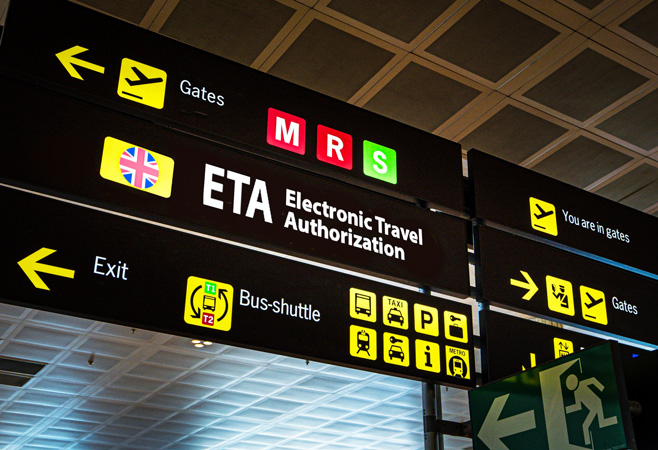
When your travel needs are short-term, and you do not require the extended stay benefits of the Super Visa, you should use an eTA (Electronic Travel Authorization) rather than a Canada Super Visa.An eTA will be suitable in the following cases:
1. You Are a Citizen of a Visa-Exempt Country
An eTA can only be issued to those travelers who possess passports of visa-exempt nations and enter Canada by air.In this case, the Canada Super Visa is not necessary and is offered to such travelers.
2. Your Visit Is Short-Term
An eTA is normally adequate, provided that you plan to visit Canada in the short-term, that is, usually up to six months per entry, but this must be approved by a border services officer.The Super visa is, so to speak, a long-stay visa.
3. You Do Not Qualify for a Super Visa
Super Visa is restricted to parents and grandparents of permanent residents or citizens of Canada.In case you do not belong to this category or you do not require the benefits of a long-term family visit, an eTA is the right choice.
4. You Prefer a Simpler Application Process
An eTA application that is done fully online needs little documentation and is normally taken up by the authorities much faster than the Super Visa application.Contrarily, the Super Visa would demand evidence of income (LICO), personal medical cover, and an immigration medical check-up.
Conclusion
In conclusion, the Canada Super Visa program provides an effective opportunity for parents and grandparents to reunite with their families and spend extended time in Canada.The Super Visa, with prolonged authorized residency, validity with multiple entries, and the possibility of extending it within the Canadian borders, is one of the most feasible ones to be offered to parents and grandparents of Canadian citizens and permanent residents.Nonetheless, to be approved and meet the required standards, one should meet the eligibility criteria, fill out the correct documents, and have valid medical insurance.
In case one of the parents or relatives who are not able to request a Super Visa and intend to visit only in the near future, it might be much more appropriate and much faster to request an eTA online and travel by plane.To save on delays and be accurate, most travelers prefer to file their eTA applications via Canada Immigration Services, where instructions, document verification, and other subjects are provided in order to make the process very easy.With the right preparation and selection of travel authorization, travelling to Canada can be hassle-free and stress-free for families.